Best Greyhound Betting Sites – Bet on Greyhounds in 2026
Loading...
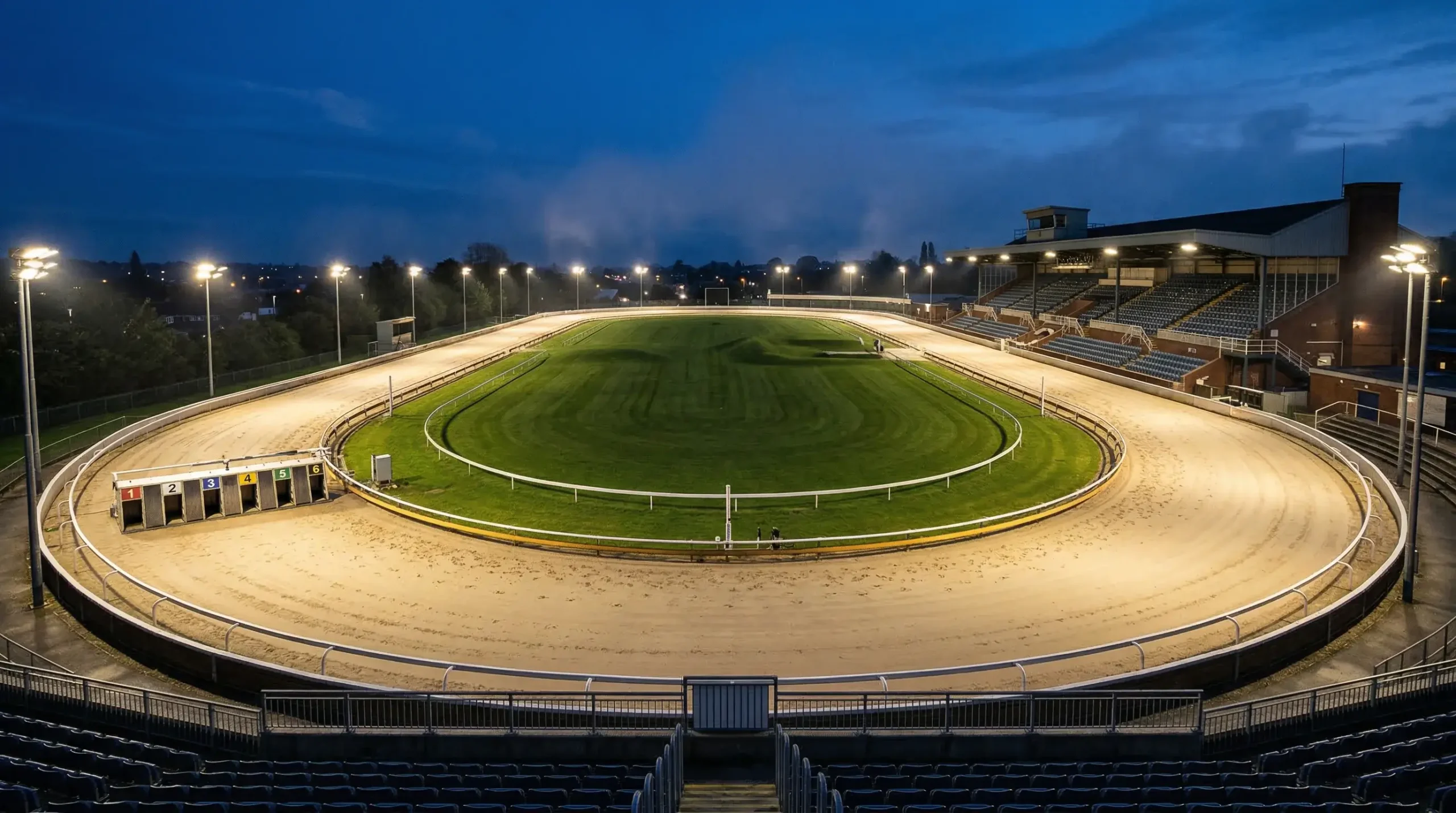
Greyhound racing in the United Kingdom operates across eighteen licensed stadiums regulated by the Greyhound Board of Great Britain. This number represents a dramatic contraction from the sport’s mid-century peak, when 77 licensed tracks and over 200 independent venues served British racegoers. Understanding where these surviving stadiums sit geographically, what distinguishes them from one another, and which tracks specialise in particular race types is fundamental knowledge for anyone following UK greyhound results.
Each stadium maintains distinct characteristics shaped by its circumference, available distances, and the local greyhound population it serves. A sprinter that excels at one track might struggle on another’s longer straights. A stayer bred for stamina tests finds some venues more accommodating than others. The eighteen licensed tracks are distributed unevenly across England and Wales, with notable concentrations in certain regions and gaps elsewhere. London, which once supported dozens of greyhound venues, now has just one remaining track following the closure of Crayford Stadium in 2025.
This guide examines every active GBGB-licensed stadium by region. For each venue, we cover the key facts that shape racing there: circumference, standard distances, typical race nights, and any distinctive features. Whether you are planning a stadium visit, attempting to compare form between tracks, or simply building your knowledge of the sport’s current footprint, this directory provides the essential reference information for UK greyhound racing in 2026.
London and the South East
The capital region that once formed the heart of British greyhound racing has contracted severely over recent decades. Where White City, Wimbledon, Walthamstow, and numerous other tracks once drew enormous crowds, today only a single licensed stadium remains. This represents one of the starkest examples of the sport’s geographic retreat, with property values and development pressure proving irresistible for track owners.
Romford Stadium
Romford stands as London’s sole surviving greyhound track, carrying the mantle for a city that once supported a dozen or more venues. Located in the London Borough of Havering, the stadium operates a 380-metre circumference track with standard distances of 225, 400, and 575 metres. Racing takes place multiple nights per week, making Romford one of the busiest tracks in the country by number of meetings.
The track’s tight turns suit quick-trapping dogs with strong early pace. Wide runners can struggle here, and trap 1 historically produces strong statistics. Romford hosts several prestigious competitions during the year and serves as a key venue for televised BAGS racing, meaning its results feature prominently in betting shop coverage across the UK.
Facilities include on-track bars and restaurants, with the stadium maintaining a prominent position in the local community despite the pressures facing urban greyhound venues. Access is straightforward via the A12 and A127, with parking available on site. Romford Greyhound Stadium postcode is RM7 9DU for satellite navigation.
Crayford: A Recent Loss
Until early 2025, Crayford provided London’s second licensed track. Located in the Borough of Bexley, it operated for decades as a popular venue for both evening racing and BAGS fixtures. The closure announcement came as part of the continuing pattern of southern England track losses, leaving Romford without a regional alternative. Crayford’s history included hosting significant open races and producing numerous top-class greyhounds, making its loss keenly felt by the London greyhound community.
Central Park (Sittingbourne)
Sittingbourne’s Central Park Stadium serves the Kent racing scene, positioned on the fringes of London’s commuter belt. The 404-metre track offers distances of 265, 480, and 630 metres, providing middle-distance and stayer races that complement the sprint-focused programmes elsewhere. Racing typically runs Friday and Saturday evenings, with additional BAGS meetings.
The track’s galloping nature rewards dogs with stamina, and its longer standard distance makes it useful for trainers stepping sprinters up in trip. Facilities are functional rather than lavish, but the track maintains steady patronage from Kent-based racegoers and trainers.
The Midlands
The Midlands maintains one of the strongest concentrations of licensed greyhound tracks in Britain, with four stadiums serving the region’s sizeable population. These tracks range from historic venues with decades of tradition to more modern facilities, collectively offering racing several nights per week across different locations.
Monmore Green (Wolverhampton)
Monmore Green has operated since 1928, making it one of the longest-established venues in British greyhound racing. The Wolverhampton track runs a 425-metre circumference with distances of 264, 480, and 630 metres. Its sweeping bends suit galloping types, and the track has hosted numerous major competitions over the decades.
Racing nights include Monday, Friday, and Saturday evenings, with the stadium also hosting regular BAGS cards. The on-site restaurant and bars provide a full evening’s entertainment, and the track maintains strong links with local trainers who have achieved considerable success at the venue.
Perry Barr (Birmingham)
Perry Barr Stadium serves Birmingham and the wider West Midlands conurbation. The 420-metre circuit offers races at 260, 475, and 685 metres, including genuine stayer trips for dogs with stamina. Racing takes place Thursday and Saturday evenings, supplemented by afternoon BAGS fixtures.
The track’s history includes hosting the English Greyhound Derby between 1983 and 2016, cementing its place among British greyhound racing’s most significant venues. Although the Derby has since moved, Perry Barr continues to stage major open competitions and maintains excellent facilities for racegoers and connections alike.
Nottingham (Colwick Park)
Nottingham Greyhound Stadium at Colwick Park provides East Midlands racing. The 400-metre track offers standard distances of 305, 500, and 715 metres, the longer trips suiting stayers who need room to hit their stride. Racing typically runs Wednesday and Friday evenings, with BAGS meetings adding to the schedule.
Colwick Park’s location provides good accessibility from the M1 and A52, drawing racegoers from across the East Midlands. The stadium underwent significant investment in recent years, improving facilities while maintaining the classic atmosphere that characterises successful regional tracks.
Coventry (Brandon)
Coventry Stadium at Brandon has hosted greyhound racing since the 1920s. The 395-metre circuit runs distances of 270, 480, and 684 metres, providing variety across sprint to stayer categories. Racing nights are Monday and Saturday, positioning the track as a weekend option for Midlands racegoers.
The stadium’s intimate atmosphere suits those who prefer smaller venues to larger metropolitan tracks. Local trainers dominate the regular cards, though open races draw runners from further afield. Facilities include trackside viewing and standard refreshment options.
Northern England
Northern England hosts four licensed greyhound stadiums serving substantial urban populations. The region’s tracks maintain strong traditions, though it suffered a significant loss when Belle Vue in Manchester, where British greyhound racing originated in 1926, closed permanently in 2020.
Belle Vue (Manchester): A Historical Note
Belle Vue holds unique historical significance as the birthplace of modern British greyhound racing. The first licensed meeting took place here on 24 July 1926, attracting over 1,700 spectators who witnessed something genuinely new. A dog named Mistley won the inaugural race, and by June 1927 the stadium was attracting almost 70,000 visitors weekly.
Sadly, Belle Vue closed permanently in August 2020 following the COVID-19 pandemic. The Arena Racing Company stated there was no longer a viable business case for the venue, and demolition began in May 2021. The closure left Greater Manchester without a licensed greyhound track for the first time in nearly a century, following earlier closures of Salford, White City Manchester, and Bolton. The site has since been redeveloped for housing. Belle Vue’s legacy lives on through the centenary celebrations planned for 2026, marking 100 years since British greyhound racing began at this historic venue.
Newcastle (Brough Park)
Brough Park serves the North East from its position near Newcastle city centre. The 403-metre track runs distances of 265, 480, and 640 metres, providing a balanced racing programme. Saturday evening racing draws good crowds, with additional BAGS meetings through the week.
The track’s exposed position means weather affects racing conditions more noticeably than at some enclosed venues, something regular attenders factor into their form analysis. Newcastle maintains a loyal following among North East racegoers and trainers, with successful local kennels competing strongly against visiting runners.
Sunderland
Sunderland Stadium provides Wearside with licensed greyhound racing. The 420-metre circuit offers distances at 270, 480, and 695 metres, the longer options supporting stayer competitions. Racing takes place Tuesday and Thursday evenings, positioning the track for midweek action in the North East.
The stadium competes for regional support with Newcastle’s Brough Park, but maintains sufficient local backing to sustain a viable racing programme. Trainers based between the two venues often split their runners, and form comparison between Sunderland and Newcastle times requires careful adjustment for the different track characteristics.
Doncaster
Doncaster Greyhound Stadium sits within the Doncaster Racecourse complex, sharing facilities with the famous horse racing venue. The 415-metre track runs standard distances of 270, 465, and 640 metres. Racing takes place Friday and Sunday evenings, taking advantage of the existing infrastructure.
The co-location with horse racing brings operational efficiencies and a ready-made hospitality infrastructure. Doncaster serves South Yorkshire’s racing audience and draws runners from across the region’s active training population.
Sheffield (Owlerton)
Owlerton Stadium has hosted Sheffield greyhound racing since 1929. The 400-metre track offers distances of 265, 480, and 685 metres, catering to all distance categories. Racing typically runs Monday and Thursday evenings, with the stadium also hosting various non-racing events.
Sheffield maintains a strong local following, and the stadium’s historical significance within the city extends beyond greyhounds to its role as a multipurpose venue. Owlerton’s relatively tight circuit rewards pace and trapping speed, making trap draw particularly influential on race outcomes.
South West and Southern England
Southern England outside London and the South East maintains several licensed tracks, serving coastal populations and the broader region. These venues range from established tracks with long histories to those that have navigated closer encounters with closure threats.
Hove (Brighton)
Hove Stadium provides Sussex with licensed greyhound racing, located just outside Brighton. The 407-metre circuit runs distances of 285, 500, and 695 metres, offering genuine middle-distance and stayer opportunities. Racing takes place Tuesday, Thursday, and Saturday evenings, making Hove one of the more active southern venues.
The stadium benefits from Brighton’s tourism economy, attracting visitors looking for evening entertainment alongside regular local racegoers. Hove’s coastal location creates specific weather considerations, with wind affecting race conditions more than at inland venues. The track has invested in facilities over recent years, maintaining competitiveness with other southern options.
Oxford
Oxford Stadium serves the Thames Valley region from its position in the university city. The 418-metre track offers distances at 265, 450, and 642 metres, providing variety across race types. Friday and Saturday evening racing draws from the local population and wider Oxfordshire area.
Oxford maintains a solid reputation for producing quality open-race performers, with trainers in the region competing successfully at national level. The stadium’s central southern location makes it accessible from multiple directions, though urban traffic can complicate evening arrival times.
Poole
Poole Stadium provides Dorset’s greyhound racing, serving the south coast population between Southampton and Plymouth. The 390-metre circuit runs distances of 265, 450, and 640 metres. Racing typically takes place Wednesday and Saturday evenings, with BAGS meetings adding to the schedule.
Poole’s relatively isolated position means local trainers dominate regular cards, with visiting runners less common than at tracks closer to greyhound population centres. The stadium maintains loyal regional support and provides an important facility for south coast greyhound owners and trainers.
Swindon: A Recent Closure
Swindon Stadium closed in recent years, removing one of the region’s established tracks. The closure followed the pattern seen elsewhere, with development value outweighing racing viability. The loss concentrated southern racing on fewer remaining venues, increasing travel distances for trainers in the affected catchment area.
East Anglia
East Anglia maintains several licensed tracks serving the region’s dispersed population. These venues provide racing opportunities across Norfolk, Suffolk, Essex, and Cambridgeshire, supporting a significant local training population.
Yarmouth
Yarmouth Stadium serves the Norfolk coast and wider East Anglian region. The 416-metre track runs distances of 277, 462, and 659 metres, providing options across race categories. Racing takes place Monday and Wednesday evenings, with the coastal location drawing summer tourist attendance.
Yarmouth’s position makes it somewhat isolated from other tracks, meaning local trainers dominate regular cards. The stadium benefits from the seaside resort economy during peak holiday periods, though winter attendance naturally falls. Trainers based in the area have achieved national success, demonstrating that geographic remoteness need not preclude competitive excellence.
Harlow
Harlow Stadium serves Essex and the M11 corridor north of London. The 392-metre track runs distances at 238, 415, and 592 metres, with the shorter options suiting sprinters. Tuesday and Friday evening racing positions the track for commuter-belt audiences seeking midweek entertainment.
Harlow’s proximity to London makes it accessible from the capital without the congestion of more central venues. The track provides an alternative for racegoers who prefer a smaller venue to Romford’s larger operation, and local trainers compete actively across the southern circuit.
Peterborough
Peterborough Stadium at Fengate provides racing for the western edge of East Anglia. The 425-metre circuit offers distances of 270, 475, and 675 metres, with the longer trips supporting stayer events. Racing typically takes place Saturday and Sunday evenings, providing weekend options for regional racegoers.
The stadium’s position at the intersection of major road networks makes it reasonably accessible from multiple directions. Peterborough draws runners from trainers across the East Midlands and East Anglia, and the venue has hosted significant competitions over its history.
Henlow: Closed
Henlow Stadium in Bedfordshire closed after decades of operation, another loss in the region’s track count. The closure affected trainers who relied on Henlow as a local racing option, increasing travel distances for Bedfordshire-based connections and concentrating racing on fewer regional venues.
Wales
Wales hosts a single licensed greyhound stadium, making it the most concentrated greyhound market in Britain relative to its size. This sole venue faces an uncertain future following the Welsh Government’s introduction of legislation aimed at banning greyhound racing entirely.
Valley Stadium (Ystrad Mynach)
Valley Stadium, located in Ystrad Mynach in the South Wales valleys, provides the only licensed greyhound racing in Wales. The 395-metre track runs distances at 268, 480, and 680 metres, offering a full range of race types. Racing typically takes place Wednesday and Saturday evenings, serving racegoers from across South Wales and the bordering English counties.
The stadium operates within a challenging context. In late 2025, the Welsh Government introduced the Greyhound Racing Prohibition (Wales) Bill, which passed its Stage 1 vote by 36 votes to 11 in the Senedd. Deputy First Minister Huw Irranca-Davies stated that Wales was “taking decisive action to prioritise animal welfare” in introducing the legislation. If the bill completes its passage, greyhound racing at Valley Stadium could end by April 2030.
Public opinion surveys commissioned by welfare organisations found 57% of Welsh respondents supporting a ban on greyhound racing. The petition that preceded the legislation gathered over 35,000 signatures. The GBGB has contested the bill’s necessity, arguing that welfare improvements within licensed racing have substantially reduced injury and fatality rates. Regardless of the political outcome, Valley Stadium continues to operate normally pending any legislative conclusion.
The track itself serves a loyal local following, with trainers from the valleys region competing alongside English-based connections. Valley’s isolation from other tracks means it operates somewhat independently of the broader circuit, though dogs do move between Valley and southern English venues. The stadium provides standard facilities including bars, food service, and tote betting.
Track Characteristics Compared
Comparing form between different tracks requires understanding how circuit characteristics affect race times. A 29.50-second clocking at one stadium does not equal 29.50 at another. Circumference, bend radii, surface type, and local conditions all influence times, making raw comparisons misleading without adjustment.
Circumference varies from approximately 380 metres at tighter tracks like Romford to around 425 metres at venues like Monmore Green and Peterborough. Smaller circumferences produce sharper bends that suit different running styles than the sweeping turns of larger tracks. Early-pace dogs with strong trapping speed gain more advantage at tight tracks where bend speed matters less than establishing position. Bigger-striding gallopers often prefer larger tracks where their natural action finds full expression.
Standard distances differ between venues, complicating distance-based comparisons. What one track calls 480 metres might be 475 at another and 462 at a third. Race graders account for these differences when assessing form, but casual observers comparing raw distances risk false equivalences. Specialist form services provide standardised ratings that account for track variations, offering more reliable comparison data.
Surface conditions affect times significantly. The Sports Turf Research Institute inspects all licensed tracks, with 80 visits recorded across the eighteen venues in 2024. These inspections assess sand depth, surface consistency, and drainage, factors that influence the going and therefore the times dogs record. A track running heavy after rain will produce slower times than the same track running fast in dry conditions. Calculated times attempt to adjust for these variables, but experienced racegoers factor in weather and going when assessing performances.
Geographic distribution creates practical considerations for trainers and travelling racegoers. The Midlands concentration offers multiple track options within reasonable travel distance, while those based in Wales or coastal East Anglia face longer journeys to alternative venues. This affects which dogs race where, as trainers naturally favour accessible tracks for routine entries while reserving longer trips for specific targets.
Betting markets reflect track differences in subtle ways. A dog with strong form at tight tracks commands different odds at a galloping venue than its raw statistics might suggest. Professional punters adjust expectations based on track suitability, something the racecard alone does not reveal. Watching how dogs handle specific tracks over multiple visits builds the pattern recognition that separates informed analysis from guesswork.
The full list of active GBGB-licensed stadiums stands at eighteen venues, distributed across England and Wales with Northern Ireland operating separately under different regulatory arrangements. This represents about a quarter of the tracks operating at the sport’s peak in the 1940s, when attendance figures reached 75 million annually. The pattern of closures shows no sign of reversing, though the surviving tracks appear to have reached a sustainable baseline, serving core audiences with established racing programmes.
For racegoers planning visits, most tracks provide detailed information on their websites, including race calendars, facilities, directions, and contact details. The GBGB Racecourses directory provides links to all licensed venues. Understanding the current track landscape provides essential context for following UK greyhound results and assessing form across the surviving circuit.