
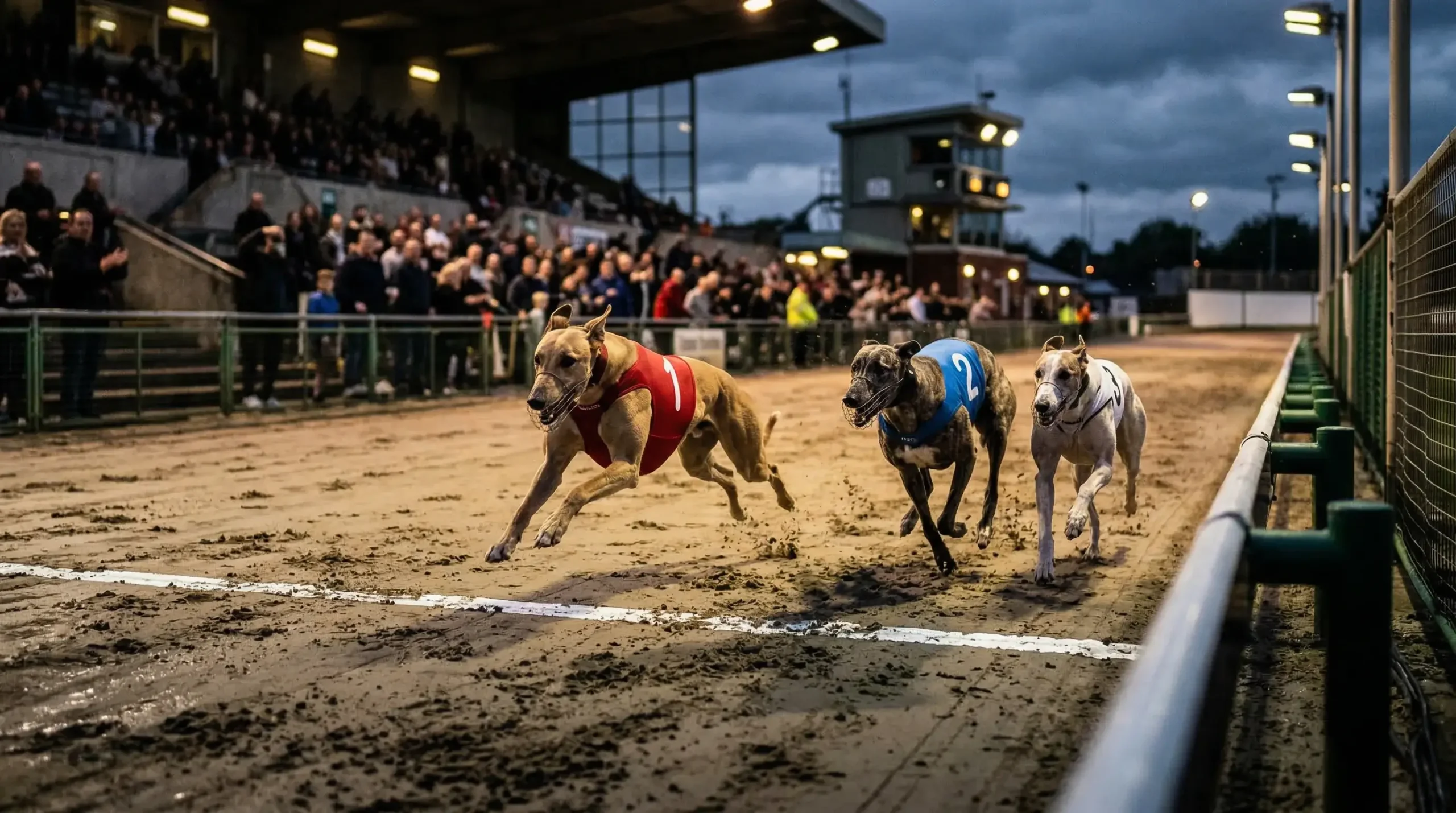
UK greyhound track results tell the story of every race, every track, every runner across Britain's licensed racing circuit. Whether you're checking last night's meeting at Romford or following form across the spring calendar, understanding how results work transforms greyhound racing from spectacle into readable data. The sport remains the sixth most-watched in Britain, drawing audiences through televised BAGS racing and evening meetings at the nation's 18 GBGB-licensed stadiums.
Those 18 tracks represent the entire regulated greyhound racing infrastructure in England and Wales. The Greyhound Board of Great Britain oversees licensing, welfare standards, and result verification for approximately 355,000 races annually. Each result carries more than finishing positions — it records trap times, sectional splits, weight fluctuations, and comment codes that experienced readers decode within seconds. The racecard becomes a diagnostic tool, the form figures a compressed history of canine athleticism and kennel management.
This guide covers the complete landscape: how racing works mechanically, where to find live and historical results, what each element of a racecard means, and how the grading system places dogs against appropriate competition. It addresses welfare data transparently because modern greyhound racing cannot be discussed without acknowledging both its improvements and ongoing debates. You will find betting explained as information rather than encouragement — the mechanics of odds and markets are part of understanding why results matter to different audiences. From the casual viewer catching highlights on Racing Post Greyhound TV to the serious analyst building sectional databases, every race, every track produces data worth understanding.
What You'll Learn About UK Greyhound Results
- All 18 GBGB-licensed tracks operate under unified regulation, with results standardised across England and Wales — down from 77 licensed venues in the 1940s.
- Racecards contain trap colours, form figures, sectional times, and comment abbreviations that decode recent performance in seconds.
- The grading system places dogs from A10 through A1 to Open class, ensuring competitive races rather than mismatches.
- Industry welfare data shows a 1.07% injury rate in 2024 — the lowest recorded — with 94% of retired greyhounds successfully rehomed or retained.
- Betting turnover reached £1.5 billion in 2022–23, funding the sport through bookmaker levies while facing a 23% decline in real terms over three years.
How UK Greyhound Racing Works
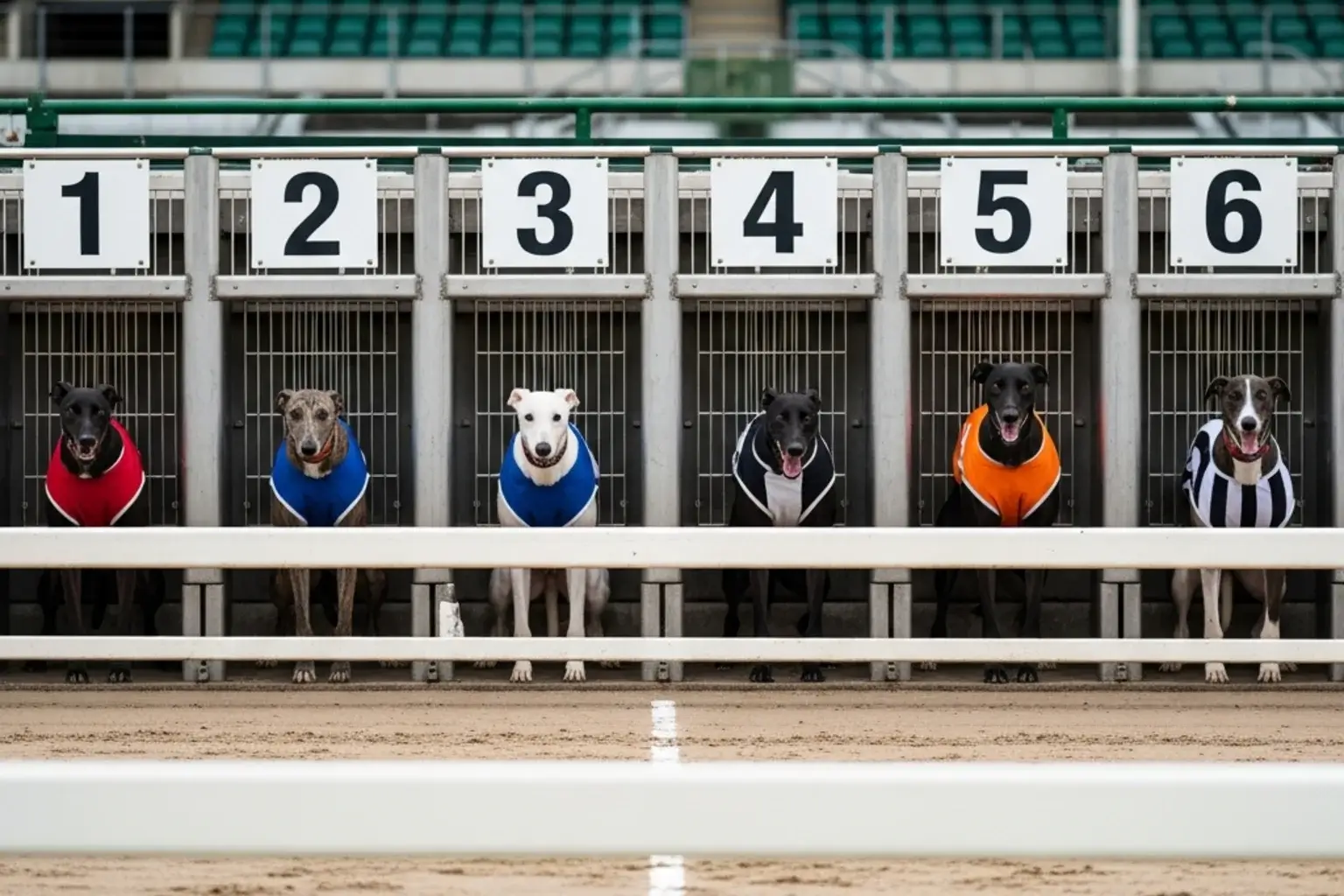
Greyhound racing follows a standardised format across all licensed British tracks. Six dogs occupy numbered traps — one through six, left to right facing the starting boxes — and chase a mechanical lure around an oval circuit. The lure, typically a foam or artificial fur "hare" mounted on an electric rail, travels ahead of the pack at speeds the dogs cannot quite match. Races conclude when the first greyhound crosses the finish line, though results record times and positions for all six runners.
Distances vary according to track configuration and race type. Sprint races run between 240 and 300 metres, testing raw acceleration and early pace. Standard distances — the most common category — cover 450 to 500 metres, balancing speed with stamina and allowing slower starters to find running room around the bends. Marathon events stretch beyond 600 metres, sometimes reaching 1,000 metres at tracks with longer straights, demanding endurance that separates true stayers from fast finishers. Each track publishes its available distances because circuit dimensions determine what's physically possible: Romford cannot host the same marathon distances available at larger circuits.
The grading system ensures dogs race against appropriate competition. New entrants begin in maiden or introductory grades, progressing upward as they win. Grades run from A10 at the lower end through A1, with Open races reserved for elite performers. A dog winning by significant margins faces promotion; consistent poor performances trigger demotion. The system prevents a class A2 runner from repeatedly crushing A8 competition, maintaining competitive fields where finishing positions reflect performance rather than mismatched ability.
Timing distinguishes results data from simple finishing orders. Actual time records how long a greyhound took from trap release to crossing the line. Calculated time adjusts this figure for running rail position and track conditions, allowing comparison across different circumstances. A dog running wide around both bends covers more ground than one hugging the rail — calculated time accounts for this geometry. When the 2026 spring season began with heavy rainfall affecting track surfaces across the Midlands, calculated times helped analysts separate genuine form drops from going-affected performances.
Prize money structures reflect race prestige. The English Greyhound Derby offers £175,000 to the winner, the sport's richest prize. Total prize money across British greyhound racing reaches approximately £15.7 million annually, distributed through graded races, opens, and championship events throughout the calendar. These figures fund the professional training kennels and incentivise the breeding programmes that supply licensed racing. Over 80% of greyhounds racing in the UK originate from Ireland, with approximately 6,250 dogs exported annually, though British-bred litters have increased to 15.5% of the racing population.
Complete Directory of UK Greyhound Tracks
Britain's 18 GBGB-licensed stadiums represent a dramatic contraction from the sport's mid-century peak. The 1940s saw 77 licensed tracks and over 200 independent "flapping" venues operating across the country. By 2010, 91 licensed track closures had reshaped the racing map. The last independent track closed in March 2025, leaving regulated GBGB racing as the only surviving format. Understanding which tracks operate, their characteristics, and their regional distribution helps anyone following results place performances in context.
London and South East
Romford Greyhound Stadium stands as London's sole surviving track, carrying significant symbolic weight after Crayford's January 2025 closure. Located in Essex, Romford hosts racing multiple nights weekly and serves as the capital's connection to a sport that once filled stadiums across every borough. The track runs standard distances of 400 and 575 metres, with race nights drawing local punters and televised meetings reaching national BAGS audiences. Its survival amid London property pressures makes every Romford result a minor victory for urban greyhound racing.
Crayford's closure left the south-east with limited options beyond Romford. Central Park Stadium in Sittingbourne offers Kent-based racing, though with a smaller profile than the departed Crayford operation. The regional concentration means south-eastern form students primarily track Romford meetings, with occasional cross-referencing when dogs transfer between circuits.
Midlands
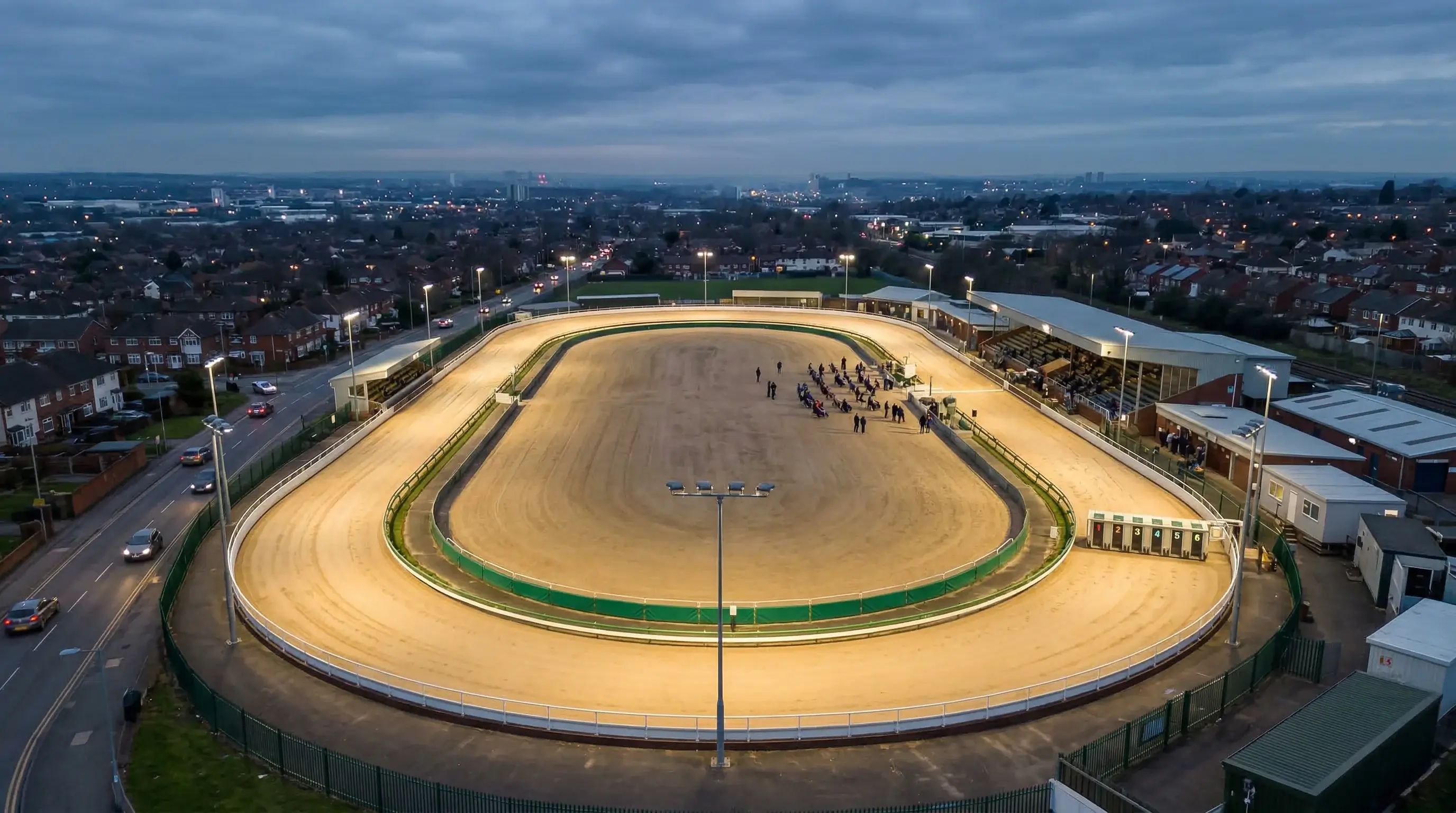
Perry Barr in Birmingham anchors Midlands greyhound racing. The stadium hosts the prestigious Derby heats and maintains high-grade racing throughout the calendar. Distances suit both sprinters and standard runners, making Perry Barr form relevant across most track profiles. Monmore Green in Wolverhampton provides the second Midlands venue, with racing focused on evening meetings that attract strong local attendance. The two tracks share trainers and dogs regularly enough that Midlands form carries consistent meaning.
North West
Belle Vue in Manchester holds historical significance as British greyhound racing's birthplace — the first licensed meeting occurred there on 24 July 1926. The stadium closed permanently in August 2020 after the COVID-19 pandemic accelerated its demise following decades of declining attendance. During its 94-year history, Belle Vue hosted prestigious events including the Cesarewitch, Gold Collar, and Laurels. The site was demolished in 2021 to make way for housing development, ending a chapter of Manchester sporting heritage.
Doncaster provides Yorkshire racing, bridging the gap between North West and North East circuits. Its relative isolation means dogs racing there may show different form patterns than those competing at other tracks.
North East
Newcastle Stadium hosts the region's primary racing programme. The track draws from a distinct training population, with kennels often specialising in Newcastle-specific preparation. Form from Newcastle translates less directly to southern circuits than Midlands results transfer between Perry Barr and Monmore, making regional context essential when interpreting finishing positions.
Sunderland provides the second North East venue, offering additional racing nights and absorbing dogs whose Newcastle form suggests better prospects elsewhere. The two-track ecosystem creates local rivalries and training patterns visible in results data.
South West and Wales
Towcester serves multiple roles: a major meeting venue, a historical racing centre, and the home of significant championship events. The track's configuration supports varied distances, and its profile attracts trainers willing to travel dogs for higher-grade competition.
Valley Stadium in Wales represents the only Welsh track under GBGB licensing. Its future faces uncertainty as Welsh Government legislation progresses toward banning greyhound racing in the principality, with implementation potentially arriving before 2030. Current Valley results carry an asterisk of political context — how long this form data continues appearing depends on legislative outcomes rather than commercial viability.
East and South
Yarmouth provides East Anglian racing, somewhat isolated from the denser Midlands circuit. Dogs performing well at Yarmouth may benefit from specific training approaches suited to that track's characteristics. Harlow and Henlow complete the eastern coverage, with each track maintaining distinct meeting schedules and grade structures.
Poole and Swindon anchor the south-central corridor, while Kinsley in Yorkshire and Sheffield complete the northern spread. Each track's result patterns reflect local training populations, track configurations, and the travelling dogs that appear for higher-grade opportunities.
The 18-track network means serious form analysts must understand regional patterns rather than treating all results as interchangeable data points. A dog winning comfortably at Kinsley may find Perry Barr bends more demanding. A Romford specialist might struggle with Towcester's longer distances. Results gain meaning from knowing what each track asks of its runners.
Reading the Greyhound Racecard
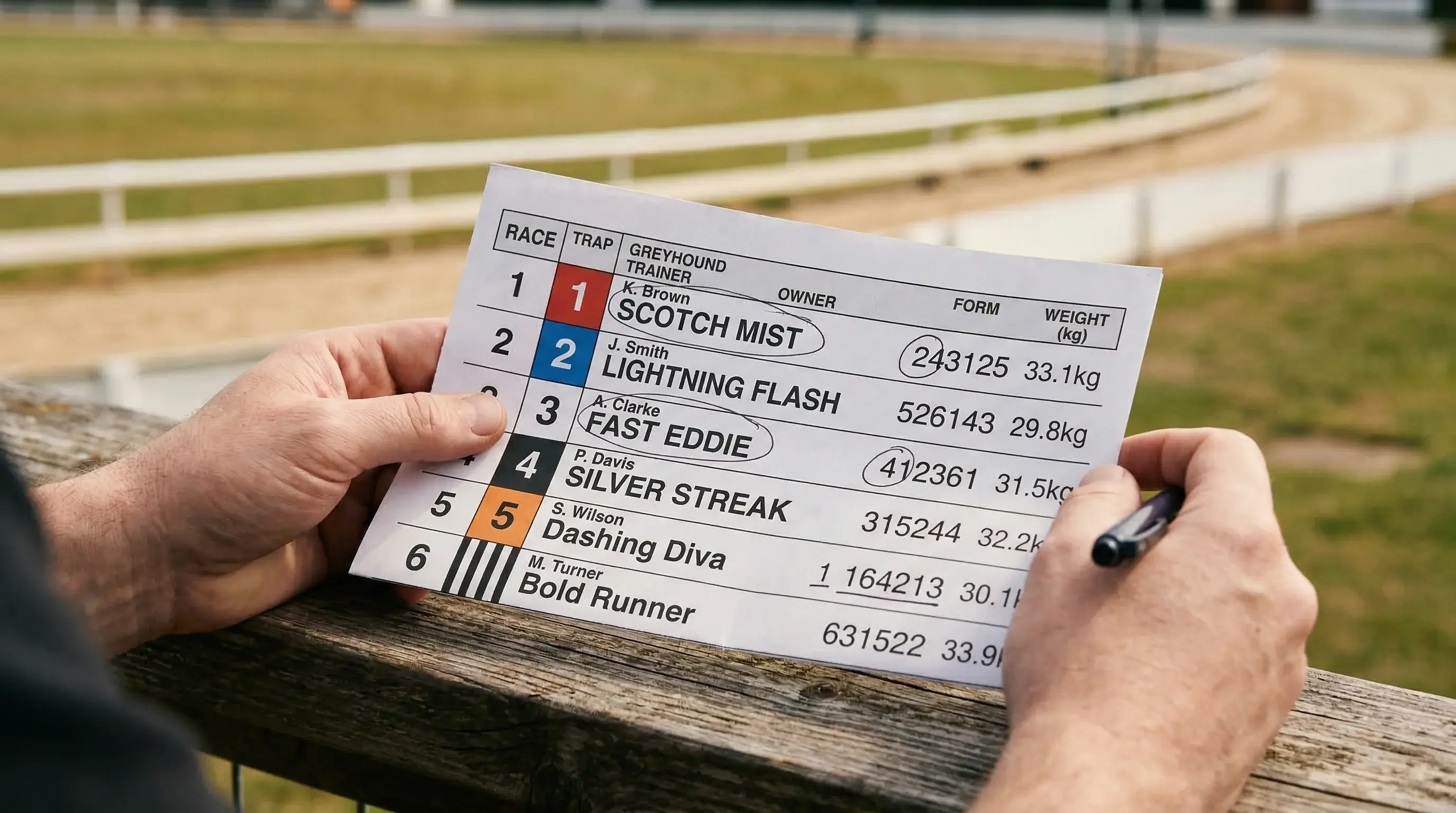
The racecard compresses everything known about a race into a structured format. What appears as dense shorthand to newcomers becomes fluent communication after practice. Each element serves a purpose, and understanding the complete picture requires decoding every component — from trap colours that identify runners during the race to comment abbreviations that summarise how previous races unfolded.
Trap Numbers and Colours
Six traps line the starting boxes, numbered one through six from the inside rail outward. Each number corresponds to a fixed jacket colour worn by the greyhound: trap one wears red, trap two blue, trap three white, trap four black, trap five orange, and trap six wears black and white stripes. These colours persist regardless of track or meeting, creating universal identification. During a race, spotting "the red jacket" immediately indicates the trap one runner, while "orange" means trap five — no need to read names at racing speed.
Trap position matters beyond identification. Inside traps offer shorter runs to the first bend, advantageous for dogs with early pace who can establish rail position before the pack arrives. Outside traps suit wide runners who prefer clear space rather than fighting for room. Results data includes trap draw statistics showing which positions win most frequently at specific tracks — some circuits favour inside runners heavily, others show more even distributions.
Greyhound Information
Each dog's entry displays name, age, colour, sex, and breeding. Names follow convention rather than regulation: typically short, distinctive, and avoiding direct commercial references. Age matters because greyhounds peak between two and four years, with older dogs requiring evidence of maintained form to justify continued confidence. Colour codes abbreviate efficiently: "bk" means black, "bd" brindle, "wbk" white and black, with combinations covering the breed's typical range.
Breeding information lists sire and dam, connecting current runners to bloodlines that experienced breeders recognise. A dog by a proven sire from a producing dam family arrives with pedigree expectations, though individual performance ultimately determines results. The breeding section helps identify relationships between runners — full siblings or half-siblings from the same sire appear regularly at the same tracks.
Trainer and Kennel
Trainer names indicate the kennel responsible for preparation. Experienced form readers recognise trainers by reputation: some specialise in sprinters, others develop stayers, some excel at specific tracks. A trainer's strike rate — percentage of runners that win — provides baseline expectations. When a high-strike-rate trainer enters a dog at their specialist track, the combination suggests better prospects than raw form might indicate.
Kennel form tracks recent performance across all a trainer's runners, not just the individual dog. A kennel firing winners consistently signals good preparation. A kennel struggling across multiple dogs suggests systemic issues affecting even well-credentialled individuals. The trainer column transforms from mere identification into analytical shorthand.
Form Figures
The form string displays recent finishing positions as a sequence of digits. Reading left to right shows chronological order, most recent race first. A form line of "321456" indicates: most recent race finished third, before that second, before that first, then fourth, fifth, sixth going back through the last six runs. The number zero denotes a fall, knockover, or failure to finish. A dash indicates no race run in that position.
Interpreting form requires context beyond the bare numbers. Three consecutive first places suggests a dog in winning form, likely facing promotion to a higher grade where competition stiffens. A string showing declining positions — "123456" — indicates deteriorating performance that might signal physical issues, training problems, or simply ageing. Inconsistent figures like "142635" reveal unpredictability: capable of winning but equally capable of trailing the field.
Weight and Sectional Times
Weight appears in kilograms, typically ranging from 26kg to 36kg depending on individual builds. Changes between races matter more than absolute figures. A dog gaining significant weight might carry excess condition affecting pace. Sharp weight drops could indicate illness, stress, or intensive training. Consistent weight suggests maintained physical state. Experienced readers track weight fluctuations across a dog's career, identifying optimal racing condition.
Sectional times break the race into splits: time to the first bend, time across specific segments, overall finishing time. These figures separate dogs with early pace from those who finish strongly. A dog consistently fast to the bend but fading in closing sectionals suits sprint distances. One with slower early splits but strong final sections may excel over marathon trips where early pace matters less.
Common Comment Abbreviations
SAW — Slow Away: the dog left the traps behind the pace, losing early ground.
Ld — Led: the dog led at some point during the race.
Crd — Crowded: the dog experienced interference from other runners.
Bmp — Bumped: physical contact affected the run.
Ck — Checked: forced to slow or change direction.
W — Wide: ran wide on the bends, covering extra distance.
RIs — Railed: ran close to the inside rail throughout.
Comment abbreviations explain why a result occurred beyond the bare finishing position. "SAW Crd2 FinWl" tells a story: slow away from traps, crowded on the second bend, finished well despite problems. A third-place finish with those comments might indicate better ability than the position suggests. Conversely, "Ld-Crd-Fdd" — led, then crowded, then faded — might excuse a poor result or reveal stamina limitations. These abbreviations turn results into narratives.
Understanding Greyhound Form
Form analysis converts racecard data into performance predictions. The six-digit form string provides raw material, but interpretation requires understanding what those numbers actually measure. A "1" in first position means winning the most recent race — but winning what? Against whom? Under what conditions? Form reading answers these questions by contextualising results within the broader pattern of a greyhound's career.
Decoding Position Numbers
Each digit represents a finishing position from one through six. The sequence reads chronologically from left to right, with the leftmost digit showing the most recent result. A form line of "111111" indicates six consecutive wins — exceptional form suggesting either a dog outclassing its grade or about to face promotion. The pattern "654321" shows steady improvement: sixth place, then fifth, fourth, third, second, and most recently first. This improving trajectory often continues into the next race.
Form Figure "0" — indicates the greyhound did not complete the race. This typically means a fall, a collision that removed the dog from contention, or a failure to finish for injury-related reasons. A single "0" among otherwise solid figures might reflect bad luck; multiple zeros warrant investigation into physical soundness.
The absence of races appears as a dash in the form string. A fresh greyhound returning from layoff shows fewer than six figures, with dashes filling unused positions. Long absences trigger questions: was the break for injury, seasonal rest, or transition between trainers? Returning dogs represent uncertain propositions until they re-establish current form.
Trap Performance Patterns
Beyond raw finishing positions, form analysis examines how a greyhound performs from different trap draws. Some dogs excel from inside traps, using early pace to secure rail position into the first bend. Others perform better from outside draws, avoiding early crowding by sweeping wide. Results data tracks trap-specific records — a dog with excellent form from trap one but poor results from trap six may be badly drawn in an outside box.
This pattern recognition extends to track familiarity. A greyhound racing repeatedly at the same venue develops course knowledge that aids performance. First-time visitors face unfamiliar bends, different lure speeds, and surface characteristics their training hasn't addressed. Form from a dog's regular track carries more predictive weight than figures achieved elsewhere.
Early Pace and Running Style
Sectional times reveal running style independent of finishing position. A dog recording fast times to the first bend demonstrates early pace — the ability to leave traps sharply and establish position before the pack congests. Early pace dogs often prefer inside traps where the run to the bend is shortest. They aim to lead through the first turn, using the rail to maintain position while others race around them.
Early Pace Rating — a measurement comparing a greyhound's time to the first bend against competitors. Dogs with consistently strong early pace ratings make their own running, reducing dependence on clear passages and avoiding the crowding that affects slower starters.
Closers operate differently. These dogs settle behind early pace, conserve energy through the middle of the race, and produce finishing speed when others tire. Their form strings might show late recoveries — beaten at the second bend but placing first or second at the line. Closers often prefer longer distances where their finishing kick finds more room to operate.
Interpreting Form Trends
Single-race results mean less than multi-race patterns. A second place following five consecutive firsts might not indicate decline — grade promotion typically explains initial difficulty at higher levels. A fourth place after consistent seconds and thirds might actually represent improvement if the grade increased. Context transforms numbers into narrative.
Weight changes across the form period add another dimension. A dog showing improving positions while weight stabilises at an optimal figure appears in genuinely ascending form. Declining positions alongside significant weight fluctuations suggest physical issues rather than form loss. The combination of position numbers, weights, and comment abbreviations creates a diagnostic picture that single metrics cannot provide.
Greyhound Racing Glossary
Greyhound racing developed its vocabulary over decades, borrowing from horse racing while creating terms specific to the sport. Familiarity with this language makes racecards readable and commentary comprehensible. The following definitions cover terms appearing most frequently in UK results and analysis.
BAGS — Bookmakers Afternoon Greyhound Service. The syndicated racing programme that provides content to betting shops and online platforms throughout daytime hours. BAGS meetings generate significant betting turnover and fund track operations through media rights.
BSP — Betfair Starting Price. The final matched price on the Betfair exchange at race start, calculated algorithmically from actual bets placed. BSP often differs from traditional SP, sometimes significantly on less liquid markets.
Calculated Time — An adjusted finishing time accounting for running rail, track condition, and positional disadvantages. Allows comparison between dogs who ran different races — one hugging the rail, another swept wide — by standardising for distance covered.
Forecast — A bet requiring prediction of first and second place in correct order. Straight forecasts demand exact sequence; reverse forecasts cover both possible orderings at increased stake.
GBGB — Greyhound Board of Great Britain. The regulatory body licensing tracks, registering greyhounds, maintaining welfare standards, and publishing official results across England and Wales.
Going — Track surface condition affecting running times and injury risk. Going descriptions range from "fast" through "standard" to "slow," with wet conditions particularly impacting early pace and bend running.
Graded Race — A race where entrants meet grade requirements based on recent performance. Dogs winning in grade face promotion; consistent poor performers face relegation. The grading system from A10 through A1 ensures competitive fields.
Maiden — A greyhound that has never won a race. Maiden races restrict entry to non-winners, providing opportunity for dogs to break through against similar competition.
Open Race — A race without grade restrictions, attracting the highest-class competitors. Open races offer larger prize money and represent the sport's elite level.
Sectional Time — Time recorded at specific points during a race, typically to the first bend and at subsequent markers. Sectional analysis reveals running style beyond bare finishing position.
SP — Starting Price. The final odds available from traditional bookmakers at race start, calculated from on-course market returns. SP determines returns for bets struck without taking fixed odds.
Strike Rate — Percentage of runners that win. Applied to trainers, kennels, or specific trap positions, strike rate provides baseline expectation for performance.
Trap — The starting box from which a greyhound begins the race. Six traps numbered one through six, with trap one closest to the inside rail.
Tricast — A bet requiring prediction of first, second, and third place in correct order. Tricasts offer larger returns than forecasts but demand greater accuracy.
Whelping Date — A greyhound's birth date, determining age for competition purposes. Most dogs race between two and five years, with whelping date indicating career stage.
Greyhound Betting Types and Odds
Betting activity funds greyhound racing through bookmaker contributions and track betting levies. Understanding bet types and odds formats provides context for why results matter to different audiences. This section explains mechanics rather than encouraging wagering — the information helps readers interpret market movements and understand the sport's economic structure.
Betting turnover on greyhound racing reached £1.5 billion across off-course, on-course, and remote channels in 2022–23. This figure represents approximately one quarter of global greyhound betting activity. While turnover has declined 23% in real terms over recent years, the sums involved remain substantial enough to sustain an 18-track infrastructure and the welfare programmes dependent on industry funding.
Win, Place, and Each-Way
Win bets return only if the selected greyhound finishes first. Place bets return if the selection finishes within the placing positions — typically first or second in a six-runner race, though terms vary by bookmaker and field size. Each-way bets combine win and place at double the stake, providing partial returns if the selection places without winning.
These straightforward bet types suit casual participants and allow direct interpretation of results. A dog finishing first settles win bets positively; second place pays place and each-way returns while losing straight win bets. The simplicity makes win/place betting accessible without extensive form knowledge.
Forecast and Tricast
Forecast bets require naming the first two finishers in correct order. Straight forecasts pay only when the exact sequence occurs; reverse forecasts cover both possible orderings at twice the stake. Combination forecasts select multiple dogs, covering every possible forecast between them at stakes reflecting permutation numbers.
Tricast bets extend this logic to three places: first, second, and third in exact order. The additional difficulty produces larger returns but demands greater accuracy. Full cover tricast bets select multiple dogs, generating stakes that escalate quickly with each addition. A four-dog combination tricast requires predicting all 24 possible finishing orders, pricing out casual participants.
Tote Pool Betting
Pool betting aggregates stakes and divides returns among winners after deducting the operator's take. The Tote offers Win, Place, Exacta (forecast equivalent), Trifecta (tricast equivalent), and Jackpot pools. Returns depend on how other bettors divided their money — backing an unpopular winner produces larger returns than following the crowd to an obvious favourite.
Pool betting prices appear after the race, calculated from actual stakes, unlike fixed odds taken before the start. This structure appeals to those who distrust bookmaker pricing or prefer seeing odds determined by collective action rather than corporate modelling.
Odds Formats
UK greyhound racing predominantly displays fractional odds: 3/1, 7/2, 11/4. The first number represents potential profit, the second the stake required. Odds of 3/1 return £3 profit per £1 staked, plus stake return. Decimal odds — common on exchanges and with European operators — show total return per unit staked: 4.00 equals 3/1 in fractional terms.
UK Greyhound Welfare Statistics
Welfare statistics form an essential part of understanding UK greyhound racing results. The data tells two stories depending on the reader: industry progress measured against historical baselines, or ongoing harm that critics argue any racing system produces. This section presents official figures alongside critical perspectives because informed readers deserve both.
Injury and Fatality Statistics
The GBGB Injury Report for 2024 recorded an injury rate of 1.07% across 355,682 race runs — the lowest figure since systematic recording began. This represented 3,809 injuries requiring attention. The fatality rate fell to 0.03%, half the 2020 level of 0.06%, translating to 123 on-track deaths during the year.
"There is much to be pleased and encouraged by in this year's data," stated Mark Bird, GBGB Chief Executive. "It shows that the initiatives we have introduced in recent years are now embedded and are helping to consolidate the significant progress we have made since 2018 across all measures."
Critics contextualise these percentages differently. Grey2K USA aggregates longer timeframes, calculating 35,168 injuries and 1,353 fatalities between 2017 and 2024. They note that 3,278 greyhounds were euthanised for "other reasons" — veterinary costs or unsuitability for rehoming — during the same period. The organisation argues that any fatality rate represents unacceptable harm for an entertainment industry.
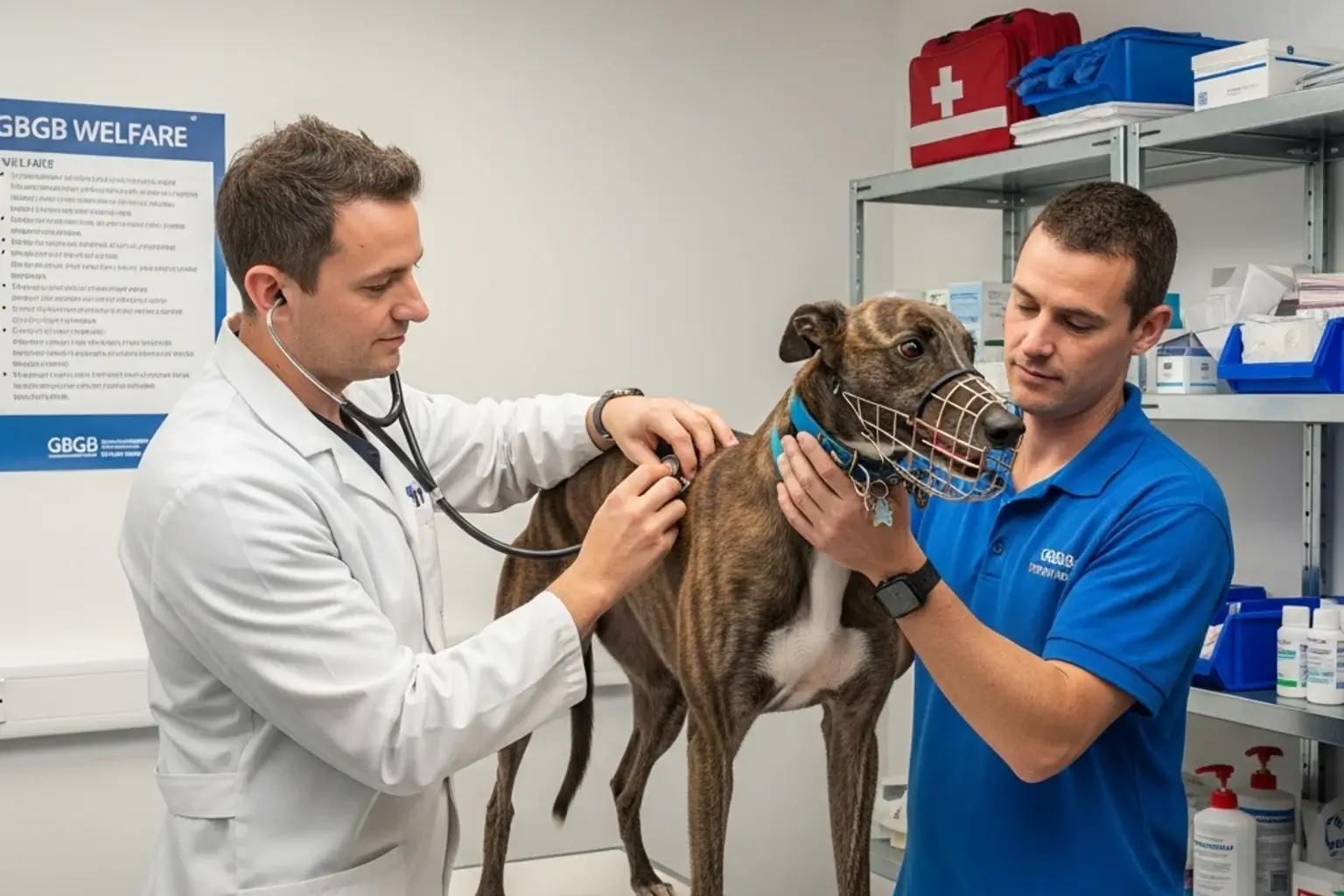
Injury breakdown by type shows hock injuries at 0.20% incidence, wrist injuries at 0.16%, and foot injuries at 0.12%. These anatomical categories help tracks identify specific risk factors and modify surfaces or race conditions accordingly. The Track Safety Committee invested £168,000 in 2024, funding improvements identified through 80 STRI expert inspections across all licensed venues.
Retirement and Rehoming
The 2024 retirement data shows 94% of racing greyhounds successfully rehomed or retained after their careers ended. Of 6,181 greyhounds leaving racing, 5,795 found placements: 1,618 remained with owners or trainers, while 3,333 passed through charitable rehoming organisations. Over 100 GBGB-approved homing centres operate across the country, handling the majority of placement work.
Economic euthanasia — dogs destroyed because treatment costs exceeded perceived value — dropped 98% from 175 cases in 2018 to just 3 in 2024. Mark Bird emphasised this reduction: "As a Board, we have been clear that putting a greyhound to sleep for economic reasons is unacceptable and I am pleased that we have reduced this by 98% since 2018."
The Greyhound Retirement Scheme has disbursed £5.6 million since 2020, funding placement support and post-racing care. The Injury Retirement Scheme added £1.5 million for dogs retiring due to racing injuries. Current GRS bond levels stand at £420 per greyhound, rising from £400 in 2025, creating financial stakes ensuring owners engage with retirement processes. Adoption rates have improved significantly, with 37% growth in adoptions during the first half of 2025 compared to the same period in 2024.
Interactive Tool
Placement Breakdown Checker, and GRS Bond Increase
Sum the guide's own placement categories against its stated total, and calculate the exact percentage rise in the GRS bond.
Unaccounted Dogs
-
-
Owners/Trainers
-
Charitable
-
Calculated Sum
-
What this guide states as a breakdown that doesn't add up: "Of 6,181 greyhounds leaving racing, 5,795 found placements: 1,618 remained with owners or trainers, while 3,333 passed through charitable rehoming organisations." Summing those two categories gives 4,951, not 5,795 — a gap of 844 dogs (14.6%) the guide never flags.
Percentage Increase
-
-
Bond 2025
-
Bond Current
-
Absolute Rise
-
What this guide gives as two figures without the gap: "Current GRS bond levels stand at £420 per greyhound, rising from £400 in 2025." The percentage increase is never calculated — it's exactly 5.0%.
Industry Training and Oversight
Welfare improvements extend beyond outcome statistics to process changes. Industry participants completed over 580 hours of continuing professional development in 2024, covering welfare standards, injury prevention, and post-racing care. Kennel inspection visits increased 73% following the 2022 welfare strategy launch, with Regional Regulatory Vets assuming responsibility for annual inspections.
The comparison to horse racing provides perspective. British horse racing recorded a 0.25% fatality rate, approximately eight times higher than greyhound racing's 0.03%. While different sports involve different risks and the comparison has limitations, it contextualises greyhound racing within broader animal sport welfare discussions.
Legislative Challenges
Wales progressed toward banning greyhound racing in late 2025, with the Senedd passing Stage 1 of prohibitory legislation by 36 votes to 11. A petition exceeding 35,000 signatures preceded the bill, reflecting public sentiment that polling suggested runs 57% in favour of prohibition. Implementation could arrive by April 2030, eliminating Valley Stadium as the sole Welsh track. Globally, the UK is among only eight countries where commercial greyhound racing remains legal.
"We have listened to the public, considered the evidence, and are taking decisive action to prioritise animal welfare," stated Huw Irranca-Davies, Welsh Deputy First Minister. "The harm from greyhound racing can no longer be justified in a modern, compassionate Wales."
Scotland introduced similar legislation in 2026, targeting an activity that no longer actually occurs there — no licensed tracks operate in Scotland — but aiming to prevent future establishment. Critics note the symbolic nature of banning something absent, while supporters argue prevention has value. The bill cleared Stage 2 with cross-party support, despite GBGB arguments that the legislation addresses non-existent racing.
Not everyone within welfare organisations endorses prohibition. Lisa Morris-Tomkins, Chief Executive of the Greyhound Trust, acknowledged shortcomings while working within the industry: "The number of racing greyhounds who never have the opportunity to experience a loving home when their racing career is over is unacceptable, and the base line injury and retirement figures published must be improved."
The welfare section of greyhound racing results cannot be separated from this political and ethical context. Every race generates data that feeds debates about whether reform suffices or abolition alone solves the problem. Readers interested in results should understand what their consumption supports and what alternatives exist.
The History of UK Greyhound Racing
British greyhound racing began at Belle Vue, Manchester on 24 July 1926. American entrepreneur Charles Munn imported the mechanical lure system that had evolved in the United States, adapting it to a purpose-built oval track. The first meeting drew 1,700 spectators — a modest start for what would become a mass entertainment phenomenon. Within months, tracks opened across industrial Britain, offering working-class audiences accessible evening entertainment that combined spectacle with gambling opportunity.
The sport's golden age arrived in the years following World War II. In 1946, British greyhound tracks recorded an aggregate attendance of 75 million — a figure exceeding football, cricket, and horse racing. The 1940s saw 77 licensed tracks operating under National Greyhound Racing Club regulation, supplemented by over 200 independent "flapping" tracks outside official oversight. Greyhound racing embedded itself in urban culture, with tracks serving as social hubs combining racing, drinking, dining, and community connection.
Decline set in gradually, then accelerated. Television kept audiences home. Alternative entertainment multiplied. Betting shops legalised in 1961 reduced the need to attend tracks for wagering purposes. Property values in urban areas where tracks occupied prime land created development pressure. Between 1960 and 2010, 91 licensed track closures reshaped the racing map. The independent sector contracted faster, unable to compete with licensed racing's regulated standards and bookmaker relationships.
The contraction continued into the 2020s. Belle Vue, the sport's birthplace, closed in 2020 and was demolished in 2021. Crayford closed in January 2025, ending greyhound racing in south-east London and leaving Romford as the capital's sole surviving venue. The London Museum documents how the sport disappeared from boroughs that once supported multiple tracks. The last independent flapping track closed in March 2025, eliminating unregulated racing entirely. What remains is the 18-track GBGB network: professional, regulated, and fighting for relevance in an entertainment market that barely remembers racing's cultural prominence.
Historical context helps explain current results patterns. Perry Barr hosts the English Greyhound Derby that has crowned champions since 1927, with a winner's prize of £175,000. The tracks that survive tend to be those with freehold land, strong local following, or integration with betting media that provides sustainable revenue. Understanding which venues matter and why requires knowing what disappeared to leave them standing.
The spring 2026 calendar proceeds against this backdrop of consolidation. Every race at every track represents a sport that once filled stadiums across the nation, now concentrated into venues whose survival depends on continued betting interest and regulatory approval. Results tell immediate stories of trap draws and finishing times; history tells the longer story of an industry that peaked within living memory and contracted to its current form.
Frequently Asked Questions About UK Greyhound Racing
How do I read a greyhound race card?
A greyhound racecard displays trap number and colour, dog name, age, trainer, form figures showing recent finishing positions, weight, and sectional times. Form figures read left to right from most recent race: "321" means third last time, second before that, first three races ago. Comment abbreviations like SAW (slow away), Crd (crowded), and Bmp (bumped) explain how races unfolded. Weight changes between races indicate physical condition — significant gains or losses warrant attention. Sectional times reveal whether a dog has early pace or prefers to finish strongly, helping match running style to trap position and race distance.
What do the trap colours mean in greyhound racing?
Six trap colours identify runners during races: trap one wears red, trap two blue, trap three white, trap four black, trap five orange, and trap six wears black and white stripes. These colours remain constant across all UK tracks, enabling instant identification at racing speed without needing to read names. Inside traps suit dogs with early pace who can establish rail position; outside traps benefit wide runners who prefer clear space. Trap statistics show which positions win most frequently at specific tracks — some circuits heavily favour inside draws while others show more even distributions.
How many greyhound tracks are there in the UK?
The UK currently has 18 GBGB-licensed greyhound tracks operating in England and Wales. This represents a dramatic decline from the 1940s when 77 licensed tracks and over 200 independent venues operated across Britain. British greyhound racing began at Belle Vue, Manchester in 1926, though that historic stadium closed permanently in 2020. Major active tracks include Perry Barr in Birmingham and Romford, which stands as London's sole remaining venue after Crayford closed in January 2025. Wales has one track, Valley Stadium, though Welsh legislation may ban racing there by 2030. Scotland has no licensed tracks, making the English and Welsh circuits the entire regulated industry.
Official Sources and Further Reading
Reliable greyhound racing information comes from regulatory bodies, welfare organisations, and established industry sources. The following resources provide official data, results access, and background for readers seeking deeper engagement with the sport.
Greyhound Board of Great Britain — The regulatory body for licensed greyhound racing in England and Wales. Publishes racecourse information, welfare reports, rules of racing, and licensing details. The GBGB website hosts official injury and retirement statistics referenced throughout this guide.
British Greyhound Racing Fund — Administers voluntary bookmaker contributions supporting the sport. The BGRF funds prize money, welfare initiatives, and industry development through its collection of 0.6% levy on greyhound betting turnover.
Greyhound Trust — The leading greyhound rehoming charity in the UK, operating homing centres and coordinating placement of retired racing dogs. Provides information on adopting greyhounds and supporting welfare work.
GBGB Racecourses Directory — Complete listing of all 18 licensed tracks with contact information, race schedules, and facility details. Essential reference for anyone following results across multiple venues.
GBGB Injury and Retirement Data — The official annual reports on injury rates, fatalities, and retirement outcomes. Contains the detailed statistics cited in this guide's welfare section, published with methodology and year-on-year comparisons.
Grey2K USA — UK Section — An advocacy organisation opposing greyhound racing, providing alternative analysis of welfare data and tracking legislative developments. Useful for understanding critics' perspectives on the industry.
Results services including Timeform, Racing Post Greyhound, and SIS provide race-by-race data, racecards, and form analysis for those following specific meetings. Individual track websites publish their own schedules and results, though the centralised GBGB system maintains authoritative records across all licensed racing.
