Best Greyhound Betting Sites – Bet on Greyhounds in 2026
Loading...
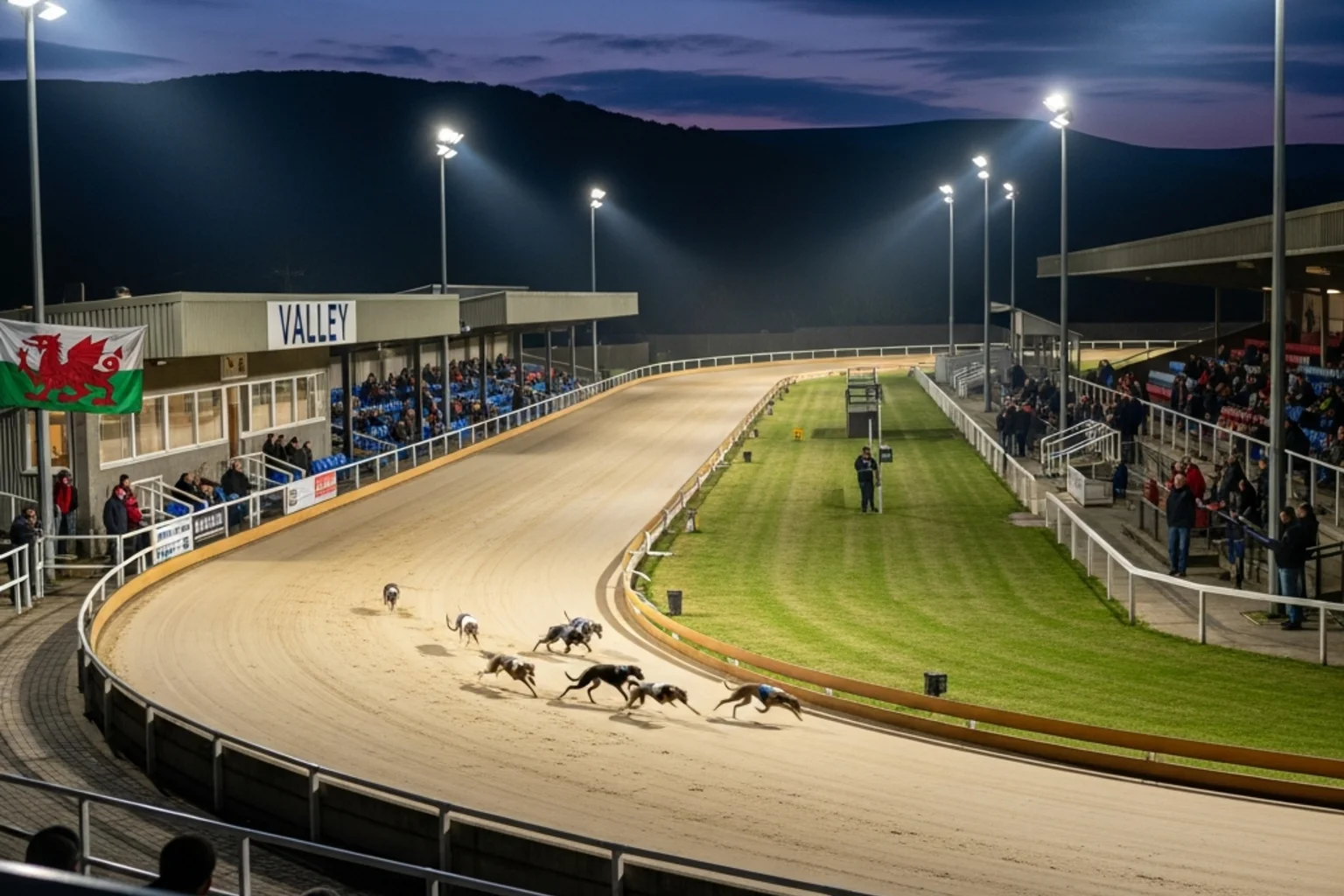
Valley Stadium in Ystrad Mynach holds a unique position in British greyhound racing: it is the only licensed track in Wales. Among the 18 GBGB-licensed stadiums operating across Britain, Valley represents the entire Welsh presence in regulated greyhound racing. For anyone in Wales wanting to attend live licensed racing, this Caerphilly County venue is the sole option available.
The stadium’s importance extends beyond geography into politics. As legislative debates about greyhound racing continue in the Senedd, Valley has become a focal point for discussions about the sport’s future in Wales. Whether the track survives potential bans or restrictions will depend on political decisions currently under active consideration by Welsh legislators and government.
This guide covers Valley Stadium’s facilities and location, its racing schedule, and the legislative context that may ultimately shape its future as Welsh greyhound racing’s only home.
Stadium Information
Valley Stadium is located in Ystrad Mynach, a town in the Rhymney Valley of south Wales. The venue sits roughly ten miles north of Cardiff, accessible via the A469 or by rail to Ystrad Mynach station on the Rhymney line. The location serves the population of the south Wales valleys while remaining within reach of Cardiff residents seeking greyhound racing entertainment.
The track measures approximately 380 metres in circumference, slightly smaller than some English venues but providing competitive racing nonetheless. Racing distances include sprint and middle-distance events suited to the track configuration. The surface is maintained according to GBGB standards, with regular attention ensuring consistent racing conditions throughout the year regardless of weather.
Facilities include grandstand viewing areas, bar and catering services, and betting facilities with both tote and on-course bookmakers. The venue caters to regular attendees from the local area alongside visitors making special trips to experience Welsh greyhound racing. The atmosphere reflects the community orientation typical of smaller tracks, where staff and regulars know each other by name.
The stadium has operated under various ownerships and survived periods when its future seemed uncertain. Like many tracks across Britain, it has adapted to changing circumstances, maintaining GBGB licensing while managing the commercial challenges facing the sport more broadly. Its survival as Wales’s only licensed track reflects both determination from those involved and sufficient local support to remain commercially viable.
Parking is available on site, important for a venue in a location where public transport options are limited compared to urban tracks. Most visitors arrive by car, and the parking provision accommodates typical race night attendance without significant problems. The location in the valleys means evening visits work better by car than relying on public transport schedules.
Racing Schedule
Valley Stadium races on selected evenings, with the schedule varying according to season and commercial demand. Race nights typically feature a card of graded races providing betting content for local punters and contributing to BAGS coverage for betting shops across Britain. The BAGS arrangement provides crucial revenue that supports continued operation.
The meeting format follows standard GBGB patterns with races programmed at regular intervals throughout the evening. First races typically begin around 7pm, with the final race roughly three hours later depending on the number of races on the card. The pace suits an evening’s entertainment without extending unreasonably late for those who need to travel home afterwards.
Trainers based in Wales and the west of England supply runners for Valley meetings. The track maintains a pool of regular runners while also attracting entries from further afield for specific races offering enhanced prize money. The grading system ensures competitive races across ability levels, from maidens to the track’s top graded events.
Special events and promotions punctuate the regular schedule throughout the year. These occasions draw larger crowds and feature enhanced prize money that attracts better quality runners. Major events at Valley offer Welsh greyhound racing its showcase moments, though the scale necessarily remains modest compared to larger English venues with bigger populations to draw from.
Admission prices are reasonable, making Valley accessible for regular attendance rather than only special occasions. The track competes with other entertainment options available to south Wales residents and prices accordingly to attract and retain audiences.
Checking the current schedule before visiting is advisable, as race nights can change and cancellations occasionally occur due to weather or other factors. The track’s website and social media provide current information about upcoming meetings and any special arrangements.
Legislative Context
Greyhound racing in Wales faces potential prohibition through legislation being considered by the Senedd. Wales has devolved powers over animal welfare that allow Welsh Government to regulate or ban activities that might be permitted elsewhere in Britain. This legislative context creates uncertainty about Valley Stadium’s future regardless of its current operational success or the loyalty of its regular attendees.
Public polling has shown significant support for restrictions on greyhound racing in Wales. A Panelbase poll found 57 per cent of Welsh adults supported banning greyhound racing in the country. This level of public support provides political cover for legislators considering prohibition and influences the broader debate about the sport’s future in Welsh politics.
Supporters of the ban argue that greyhound racing causes unavoidable animal welfare harm that cannot be regulated away. They point to injury rates, deaths during racing, and the challenges of rehoming retired racers as evidence that the sport cannot operate ethically regardless of improvements. The Welsh Government has engaged with these arguments in considering its approach to legislation.
Defenders of Valley Stadium emphasise its economic contribution, the jobs it supports, and the community it serves. They argue that welfare standards have improved significantly and continue to develop under GBGB oversight. The track provides entertainment and social space for people who would lose both if prohibition proceeded, affecting lives beyond those directly employed.
The timeline for any legislative action remains uncertain. Political priorities shift, and greyhound racing competes for attention with many other issues facing Welsh Government. Valley Stadium continues to operate while the debate proceeds, though those involved are aware that decisions beyond their control may determine the track’s ultimate fate.
Visitors to Valley can experience Welsh greyhound racing while it continues operating. Whether the track will still be racing in future years depends on political outcomes that no one can currently predict with confidence. The legislative context adds poignancy to attending Wales’s only licensed greyhound track, each visit potentially among the last.