Best Greyhound Betting Sites – Bet on Greyhounds in 2026
Loading...
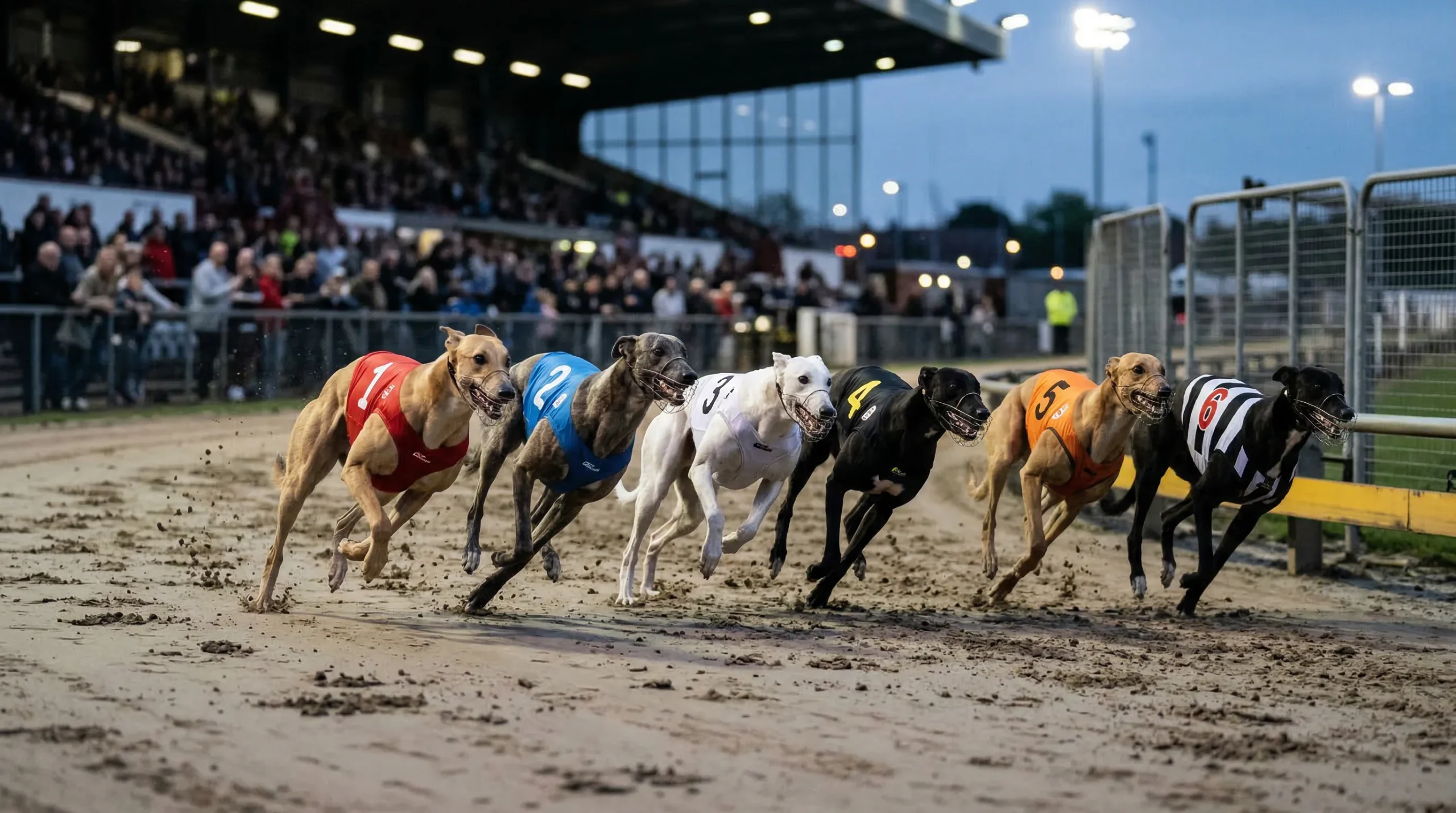
Greyhound racing divides its competitions into two fundamental categories: graded races and open races. Understanding the difference matters because it affects the quality of competition, the prize money on offer, and how you should interpret form. A dog dominating A4 graded company faces an entirely different test when stepping into open race competition against the best in the business.
Graded races group dogs of similar ability together. Open races invite the best dogs regardless of grade. This distinction shapes the entire structure of British greyhound racing, from routine weeknight cards to the sport’s most prestigious events. Both categories serve different purposes and attract different types of entries, creating a layered system that accommodates every level of runner.
This guide explains how each category works, what the various open race classifications mean, and how trainers decide which races suit their dogs best.
How Graded Racing Works
Graded races use a classification system running from A1 at the top down to A10 or A11 at most tracks. Dogs are assigned grades based on their recent performances, creating races where competitors are theoretically evenly matched. An A3 race features dogs of roughly A3 standard, not a mix of class levels competing against each other.
The grading system promotes competitive racing. When dogs of similar ability compete against each other, races become harder to predict and more exciting to watch. A dog that wins easily in A6 company will be upgraded to A5, facing stiffer competition. One that finishes last repeatedly will drop down a grade to find its level. This fluidity keeps the system responsive to actual performance.
Each track operates its own grading, though the principles are consistent across GBGB venues. A racing manager assesses performances and adjusts grades accordingly. The criteria include finishing positions, times, and the quality of opposition beaten. Dogs can move up or down through the grades throughout their careers based on current form rather than historical achievements.
The total prize fund across British greyhound racing reached £15,737,122 according to recent figures, with graded races comprising the bulk of this money. Most prize money is modest at lower grades but accumulates across a dog’s career. Graded racing keeps dogs competitive at appropriate levels while generating consistent betting interest for bookmakers and punters alike.
Graded races form the backbone of daily racing at every track. A typical meeting features mostly graded races, perhaps ten or twelve across an evening card. These races fill the programme, provide betting content, and give dogs regular competitive opportunities. Without the graded system, weaker dogs would have no chance against elite runners and would quickly leave the sport.
Reading graded form requires attention to the specific grade. A winning time in A7 means something different from the same time in A2. The class of opposition matters as much as the raw performance figures. Dogs stepping up in grade face better rivals than their previous form might suggest, while those dropping down should find things easier.
Open Race Categories
Open races abandon the grade restrictions. Any dog can enter regardless of its graded level, though in practice only the best dogs compete. These races attract the elite because they offer higher prize money and greater prestige. Open race victories carry more weight than graded wins when assessing a dog’s quality.
Open races are classified into several categories. Premier Opens sit at the top, featuring the highest prize money and the strongest fields. Major Opens come next, followed by Standard Opens. Below these sit Category One, Two, and Three opens, each with different entry criteria and reward structures as defined in the GBGB Rules of Racing.
The English Greyhound Derby exemplifies the Premier Open category, offering £175,000 to the winner. This single prize exceeds what most graded runners earn in entire careers. Other Premier Opens include the Scottish and Irish Derbies, major cup competitions, and invitation events that bring together the best dogs from across the country and Ireland.
Trainers target open races for their best dogs because the rewards justify the stiffer competition. A dog capable of winning open races becomes significantly more valuable than one limited to graded success. Open race form distinguishes genuinely top-class dogs from merely good ones, affecting both betting assessments and commercial value.
Entry to open races typically requires either an invitation based on form or payment of an entry fee. Some opens use qualifying rounds to determine finalists. Others accept direct entries from dogs meeting minimum performance criteria. The format varies by competition but always aims to produce the best possible field.
Open race form transfers between tracks more reliably than graded form. A dog winning open races at Towcester will likely compete well in opens at Newcastle or Monmore. The class level remains consistent because open races everywhere attract the same calibre of runner seeking the same prestige and prize money.
Choosing the Right Races
Trainers balance ambition against realism when placing their dogs. A talented youngster might be aimed at open races from the start, bypassing graded company entirely. A solid but limited dog might spend its career in graded races where it can compete effectively and earn prize money regularly.
The transition from graded to open racing tests dogs significantly. Some dogs dominate lower grades but cannot cope with the step up. Others show little until they find the faster pace of open company, where their true ability emerges. Trainers learn which dogs suit which level through trial and experience.
Track selection matters alongside race selection. Some dogs perform better at certain venues due to track configuration, surface, or distance. A trainer might choose a lower category open at a track that suits their dog over a higher category open at a less suitable venue.
Calendar planning shapes race selection. Major competitions have fixed dates, so trainers work backwards to prepare their dogs appropriately. A dog targeted at the Derby will have its season structured around reaching peak form for that competition. Other races become preparation rather than primary targets.
Injury risk influences decisions too. Open races feature faster dogs running harder, which can increase the chance of incidents. A trainer protecting a valuable dog might limit its open race appearances to only the most important events. Graded racing offers steadier, less intense competition where the risk of serious injury might be lower.
As Mark Bird, GBGB Chief Executive, has noted, the initiatives embedded in recent years are helping to consolidate progress across all aspects of the sport, including the structure of competition. The balance between graded and open racing gives every dog opportunities to compete at appropriate levels while providing the sport with its showpiece events. Both categories matter, and understanding how they fit together helps you appreciate greyhound racing as a complete system.
For punters, recognising whether a race is graded or open changes how you approach the form. Graded races reward knowledge of recent performances within that specific grade. Open races demand broader awareness of elite form across multiple tracks. Both offer betting opportunities, but the analytical approach differs. Master both, and you can engage with the full range of greyhound racing competition.