Best Greyhound Betting Sites – Bet on Greyhounds in 2026
Loading...
Greyhound racing involves inherent injury risk. Dogs running at speeds exceeding 40 miles per hour, navigating bends, and competing in close proximity to other runners face physical stresses that sometimes result in injuries. Understanding the types of injuries that occur, how they are treated, and what support systems exist helps place welfare discussions in proper context.
The injury rate across GBGB racing stood at 1.07 per cent in 2024, meaning roughly one injury per hundred race starts. This figure has improved from previous years but remains a focus of both industry welfare efforts and external criticism. Every injury represents a dog that needs care, and some injuries end racing careers or worse.
This guide covers the common injury types, typical recovery times, and the Injury Retirement Scheme that provides financial support for dogs whose racing careers end due to injury.
Common Injury Types
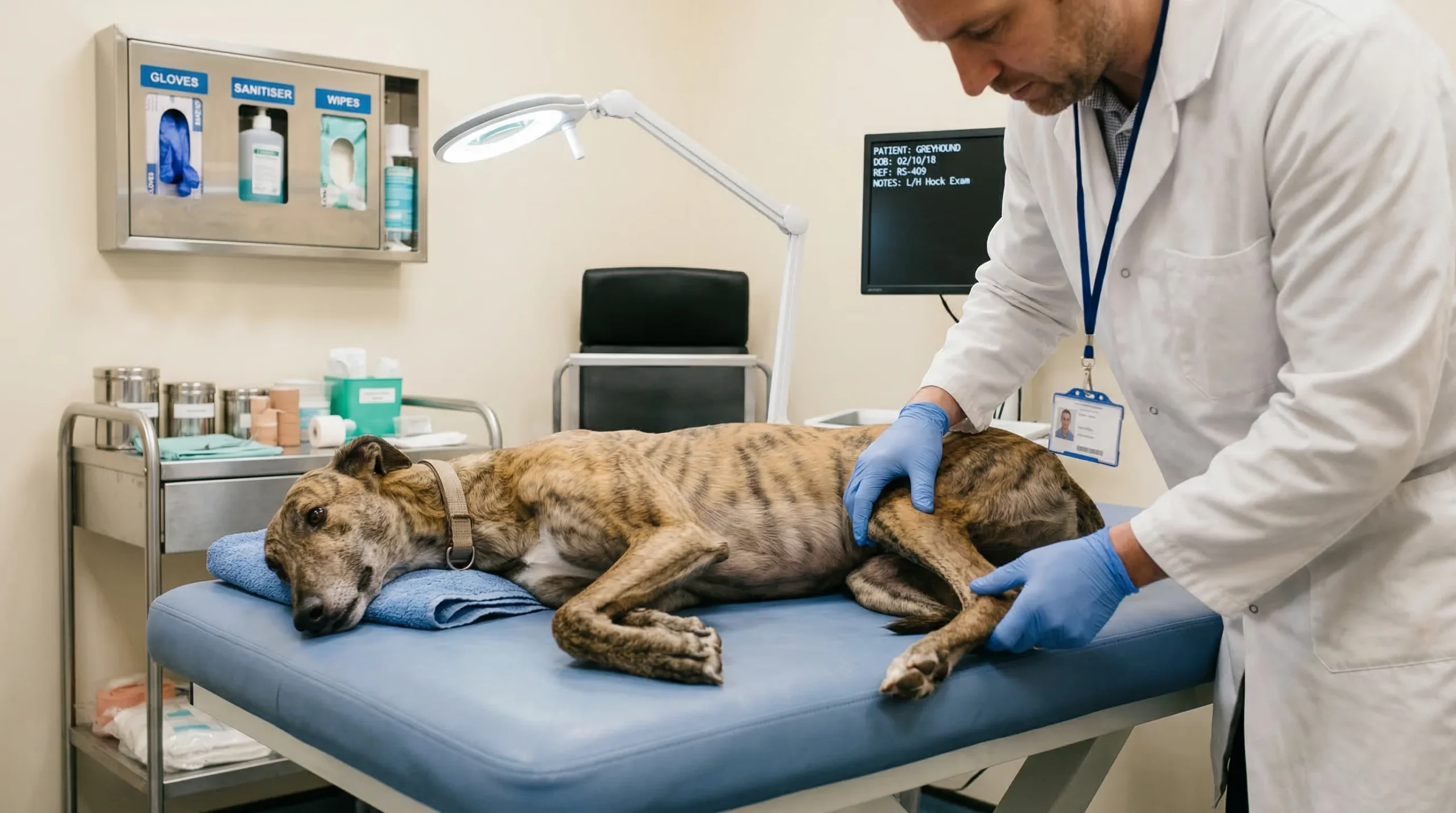
Hock injuries affect the joint equivalent to the human ankle. The hock bears enormous stress during racing, particularly on bends where forces concentrate on the outside leg as dogs lean into turns. Sprains, fractures, and ligament damage all occur in this area with varying severity. Hock injuries range from minor strains requiring brief rest to serious fractures that end racing careers permanently.
Wrist injuries similarly affect a joint under constant stress throughout racing. The canine wrist, technically the carpus, absorbs impact on every stride as the dog runs. Racing surfaces, while designed to provide cushioning, cannot eliminate this stress entirely. Wrist problems include fractures of small bones within the joint, ligament damage, and chronic wear issues that develop over extended racing careers.
Muscle injuries account for significant injury numbers. Tears and strains affect the powerful muscles that drive greyhounds at racing speeds. The gracilis and sartorius muscles of the hindquarters are particularly vulnerable to strain. Muscle injuries often allow full recovery with proper rest, though repeated muscle problems sometimes indicate dogs that cannot sustain racing careers without recurring issues.
Toe injuries result from the grip and push forces generated by running at speed. Split webbing, broken toes, and torn nails occur regularly across the racing population. While often less serious than joint or muscle injuries, toe problems can sideline dogs for weeks and may become chronic if not managed properly with appropriate rest.
Track incidents including collisions and falls cause traumatic injuries distinct from the repetitive stress injuries described above. Dogs can injure themselves through contact with other runners, the rails, or by falling during races when balance is lost. These incident-related injuries are less predictable than those resulting from racing mechanics but can be severe when they occur.
The industry publishes injury data through annual reports, allowing scrutiny of both rates and trends over time. Whether the 1.07 per cent rate represents acceptable risk remains contested, with welfare advocates arguing any preventable injury is too many while industry voices point to declining rates as evidence of genuine improvement.
Recovery Times
Recovery depends on injury type and severity. Minor muscle strains might need only two to three weeks of rest before the dog can return to training. Serious fractures can require months of recovery and may never heal sufficiently for racing to resume. Each injury must be assessed individually by veterinary professionals.
Veterinary care at tracks provides immediate assessment after injuries occur. Track vets examine injured dogs, provide initial treatment, and recommend next steps. Serious injuries are referred to specialist veterinary practices equipped for diagnostic imaging and surgical intervention if required.
Rehabilitation for injured racing greyhounds follows similar principles to human sports medicine. Rest allows initial healing. Controlled exercise rebuilds strength without risking re-injury. Hydrotherapy provides low-impact exercise that maintains fitness while joints heal. The goal is returning dogs to racing if possible, or ensuring comfortable retirement if not.
Some injuries recur despite apparently successful recovery. A dog that returns from muscle injury might suffer the same problem again under racing stress. Trainers and owners must weigh the risk of recurrence against the desire to continue racing careers. Repeated injuries sometimes signal that retirement serves the dog’s welfare better than continued racing attempts.
Fatal injuries represent the worst outcome. In 2024, 123 dogs died as a result of racing-related injuries, a figure that informs debate about whether greyhound racing can be conducted ethically. Industry advocates note that fatality rates have declined, while critics argue any preventable death is unacceptable. The 123 fatalities occurred across 355,682 races, representing a rate of approximately 0.035 per cent, but percentages provide cold comfort to those who view each death as preventable tragedy.
Injury Retirement Scheme Support
The Injury Retirement Scheme provides financial support for greyhounds whose racing careers end due to injury. The scheme recognises that injured dogs still need care even when they can no longer race, funding veterinary treatment, rehabilitation, and rehoming support for dogs forced into early retirement by injury.
IRS payments totalled £1.5 million in recent years, funding support for hundreds of dogs annually. The money comes from industry sources including betting levies and track contributions. This funding mechanism connects commercial betting activity to welfare outcomes, creating a direct link between the sport’s revenue and care for its participants.
Eligibility for IRS support requires that the injury occurred during licensed racing or training. Dogs must be registered with the GBGB and the injury must be documented through official channels. The scheme covers dogs that cannot return to racing, not those that recover and resume careers.
As Tiffany Blackett, Executive Veterinarian at GBGB, has noted: “This year has seen the successful implementation of several key strategy goals, particularly with our Regional Regulatory Vets taking over their trainers’ Annual Veterinary Kennel Inspections.” The IRS represents one element of this strategy, ensuring that dogs injured in racing receive support rather than simply being discarded when they can no longer perform.
The scheme works alongside rehoming networks to ensure retired injured dogs find homes. Financial support for veterinary care makes dogs adoptable that might otherwise be deemed too expensive to treat. The combination of medical funding and rehoming support creates pathways from injury through recovery to retirement as pets.
Critics argue that the IRS, while helpful, does not address the fundamental issue of injuries occurring in the first place. The scheme treats symptoms rather than causes, they suggest, providing compensation for harms that a well-designed sport might prevent. Industry responses emphasise continuous improvement in safety while acknowledging that some risk is inherent in athletic competition involving animals running at speed. Further information on welfare initiatives is available through GBGB publications.