
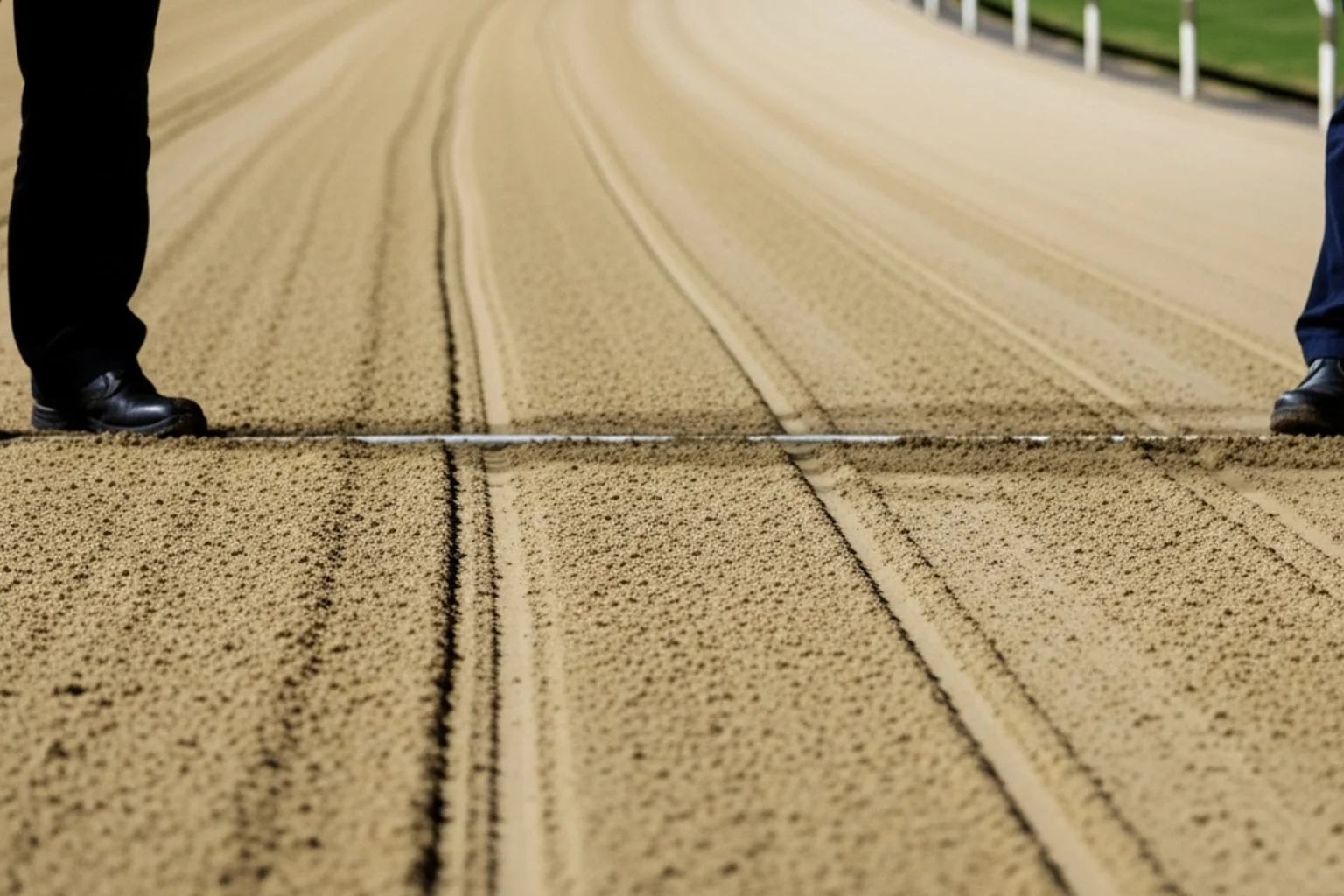
Track conditions affect every greyhound race that takes place. The going, as track surface state is called, influences times, affects how dogs run through the bends, and can favour certain running styles over others. Understanding going and how it changes helps explain why the same dog might record significantly different times on different nights at the same track. The wider context is set out in our UK greyhound track results guide.
British greyhound tracks use sand-based surfaces that respond to weather, maintenance, and accumulated use. These surfaces are not static entities. Rain softens them. Dry spells harden them. Maintenance practices alter their characteristics. The going description published for each meeting attempts to communicate these conditions clearly to punters and connections.
This guide explains going ratings and what they mean, how weather affects track conditions throughout the year, and the role of professional inspections in maintaining safe and consistent racing surfaces.
Going Ratings
Greyhound racing uses a simple going scale to communicate track conditions. Fast indicates a firm, quick surface where dogs can record their best times. Standard represents normal conditions without significant bias towards any running style. Slow describes a softer surface that adds time to finishes. Some tracks use intermediate descriptions like standard-to-fast or standard-to-slow when conditions fall between the main categories.
The going is assessed before racing and may be updated if conditions change significantly during a meeting. Track staff measure surface characteristics and translate these measurements into the going description that appears on racecards. This information is announced before racing begins to help punters factor conditions into their assessments of each race.
Fast going produces the quickest times but may not suit all dogs equally. Some dogs prefer softer ground where they can get better grip through the bends. Others excel on fast surfaces where their speed translates directly into quick finishes. Knowing individual dog preferences requires tracking performances across different going conditions over multiple races.
The Sports Turf Research Institute conducts quarterly inspections across GBGB tracks, assessing surface quality and providing technical guidance on maintenance practices. These professional assessments supplement daily track staff evaluations, ensuring consistent standards across the licensed racing circuit and identifying problems that might not be apparent to non-specialists.
Times recorded on different going should not be compared directly without adjustment. A 28.50 second 480-metre time on slow going might represent a better performance than 28.30 on fast going, even though the clock shows slower. Calculated times attempt to adjust for these differences using standard formulas, but understanding the going context behind raw times remains important for proper form analysis.
Going records for individual dogs help identify surface preferences over time. Some dogs show clear patterns, running significantly faster or slower depending on conditions they encounter. Others perform consistently regardless of going. Building this understanding requires noting conditions alongside results over multiple races and tracking patterns as they emerge.
Weather Impact
Rain is the most significant weather factor affecting greyhound track conditions. Heavy rain softens surfaces, slowing times and changing how dogs run through the bends. Light rain might actually improve grip without significantly affecting overall speed. Prolonged dry weather hardens surfaces, potentially creating faster going but also increasing injury risk if surfaces become too firm for safe running.
Track staff manage weather effects through drainage systems and active maintenance. Modern track construction includes drainage systems designed to remove excess water quickly after rain. Watering systems allow staff to add moisture to overly dry surfaces during hot weather. These tools help maintain consistent conditions despite variable British weather patterns.
Temperature affects surfaces indirectly through moisture dynamics. Frost can harden surfaces dangerously overnight, sometimes forcing meeting cancellations or delays until conditions improve. Very hot weather dries surfaces quickly, requiring additional watering to maintain appropriate conditions throughout a meeting. Seasonal patterns mean going varies predictably across the year at most tracks.
Wind affects dogs more than track surfaces directly. Strong headwinds or crosswinds influence running lines and can affect recorded times. Dogs running into wind work harder than those benefiting from tailwinds on opposite sections of the track. These effects are difficult to quantify precisely but contribute to variation in recorded times between races.
Racing sometimes continues in marginal conditions where going is significantly affected but not dangerous for the dogs. These meetings require adjusted expectations about times and may produce results that reflect conditions more than relative ability between runners. Experienced punters track weather forecasts and adjust their approaches for meetings where conditions might be unusual.
The Role of STRI
The Sports Turf Research Institute provides independent assessment of greyhound track surfaces across the GBGB circuit. STRI experts inspect tracks using scientific methodology, measuring surface characteristics and identifying issues that require attention. These professional inspections supplement the daily assessments conducted by track staff with expertise not available at every venue.
STRI inspections cover surface consistency across different sections of the track, drainage effectiveness, and overall track safety considerations. Inspectors provide detailed reports with recommendations for maintenance and improvement based on their findings. Tracks use these reports to guide their surface management programmes and address any identified problems before they affect racing or dog welfare.
The Track Safety Fund provides £168,000 annually for surface improvement projects across GBGB tracks. This funding supports capital improvements that individual tracks might struggle to finance independently from their own revenue. Surface upgrades funded through this mechanism benefit racing quality and dog safety across the entire circuit.
As Tiffany Blackett, Executive Veterinarian at GBGB, has noted: “This year has seen the successful implementation of several key strategy goals.” STRI inspections form an important part of this strategy, ensuring that surface quality receives professional attention rather than relying solely on individual track expertise that might vary in quality.
The combination of regular STRI inspections, Track Safety Fund investments, and daily maintenance creates a comprehensive system for managing surface quality. This system cannot eliminate all variation in going, as weather effects are impossible to control entirely, but it maintains surfaces within acceptable parameters for safe racing. How times are adjusted for it is in calculated time.
For punters, understanding that track surfaces receive professional attention provides confidence that going descriptions reflect genuine conditions rather than arbitrary assessments. The STRI involvement adds credibility to the going information published for each meeting, though individual track staff ultimately make the assessments that appear on racecards. More information about track standards is available through GBGB resources.
