Best Greyhound Betting Sites – Bet on Greyhounds in 2026
Loading...
The Greyhound Board of Great Britain governs licensed greyhound racing across Britain. Its Rules of Racing establish the framework within which all licensed racing operates, covering everything from track standards to drug testing protocols to welfare requirements. Understanding these rules helps explain why races are run as they are and what consequences follow when rules are broken.
The GBGB acts as both regulator and promoter of the sport, balancing commercial interests with welfare obligations and integrity requirements. Its rulebook runs to hundreds of pages covering every conceivable situation that might arise at a licensed track. Most participants never read the full rules in detail, but the framework shapes their daily experience of the sport and provides recourse when problems occur.
This guide provides an overview of the key regulatory areas: licensing requirements for tracks, trainers, and dogs; race conduct rules that govern how competitions are run; and the testing and penalty systems that enforce compliance.
Licensing Requirements
The GBGB licenses 18 tracks across Britain. To operate under GBGB jurisdiction, tracks must meet comprehensive standards covering facilities, safety, welfare provision, and operational capacity. Licensed tracks gain access to BAGS contracts and betting shop coverage but accept regulatory oversight in return for these commercial benefits. Unlicensed tracks exist outside this system, operating independently without GBGB governance or the benefits that come with licensed status.
Trainers require GBGB licenses to run dogs at licensed tracks. The licensing process involves demonstrating appropriate facilities, knowledge, and commitment to welfare standards. Applicants must show they have suitable kennels, understand nutrition and training principles, and can provide the care racing greyhounds require. Licensed trainers undergo regular inspections and must maintain standards throughout their license period. License revocation or suspension follows serious breaches of rules or welfare failures.
Racing staff including kennel hands and track officials also operate under licensing requirements. These licenses ensure that everyone involved in the handling and care of racing greyhounds has been vetted and understands their responsibilities under the rules. The licensing structure creates accountability throughout the racing operation, from kennel to track.
Dogs must be registered with the GBGB before racing at licensed tracks. Registration involves documenting the dog’s identity through microchipping, recording ownership, and noting training arrangements. Registered dogs can be traced throughout their racing careers and into retirement, supporting welfare monitoring and ensuring accountability for every animal in the system. The registration system also prevents unregistered dogs from racing, maintaining competitive integrity.
Track licenses are reviewed periodically to ensure ongoing compliance. Tracks must demonstrate continued adherence to facility standards, welfare requirements, and operational competence. The GBGB Rules of Racing specify the standards tracks must maintain, with inspections verifying compliance. Failure to meet standards can result in conditions being imposed on the license or, in extreme cases, license withdrawal that would prevent the track from operating under GBGB jurisdiction.
Race Conduct
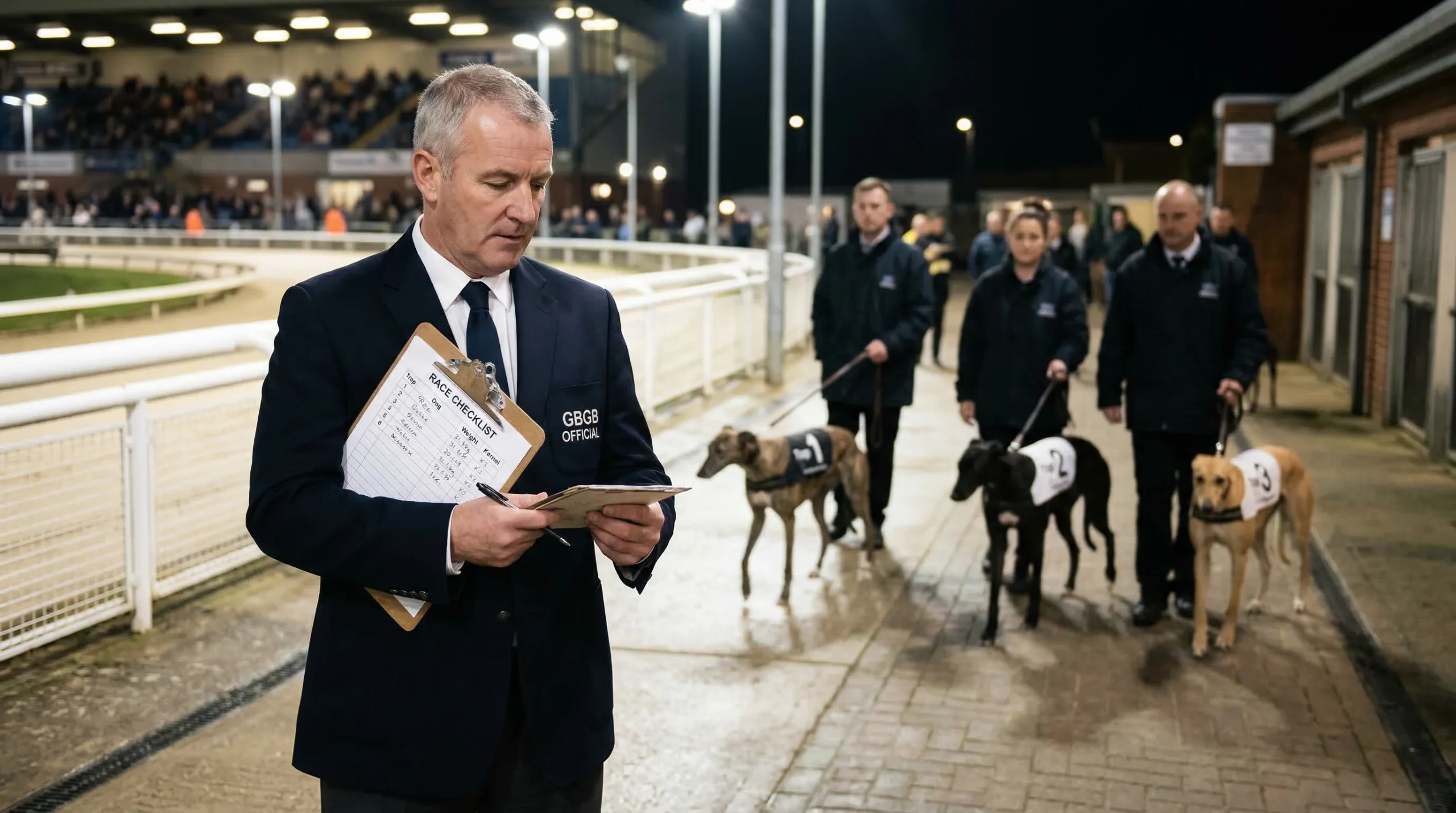
Rules governing race conduct establish how races are run fairly and safely. Dogs must be presented fit to race, properly identified, and free from prohibited substances. The pre-race process involves weighing, identification checks through microchip scanning, and veterinary inspection. Dogs failing any stage of this process cannot compete in that race.
Trap draws follow procedures designed to prevent manipulation. Seeding systems and grading criteria determine which dogs compete against each other and from which traps. Racing managers at each track apply these criteria within GBGB frameworks, creating fields that should produce competitive racing while respecting class differences between dogs of varying ability.
During races, stewards monitor proceedings for interference, bumping, or other incidents that might affect results or indicate problems with individual dogs. Stewards can hold enquiries immediately after races, taking evidence from officials and reviewing video footage from multiple angles. Their decisions can affect placings, impose penalties on dogs or their connections, or refer serious matters for further investigation.
Interference during races has specific consequences under the rules. Dogs causing significant interference to other runners may be disqualified or placed behind affected runners depending on the circumstances. Repeated interference can result in dogs being suspended from racing pending assessment of whether they can race safely. The rules aim to protect both competitive fairness and dog safety.
Grading decisions determine at what level dogs compete. Racing managers apply grading criteria that consider recent performances, recorded times, and the dog’s racing characteristics such as early pace or staying ability. Connections can appeal grading decisions through formal processes if they believe the grading is inappropriate. The grading system aims to produce races where dogs of similar ability compete against each other, creating competitive contests.
Testing and Penalties
Drug testing forms a core element of GBGB integrity enforcement. Random and targeted testing detects prohibited substances in competing dogs. The prohibited list covers performance-enhancing drugs, sedatives, and other substances that could affect racing performance or mask underlying health problems. Positive tests trigger formal investigation and potential penalties for those responsible for the dog.
Testing has increased significantly under recent GBGB initiatives, with a 73 per cent increase in unannounced visits to trainers as part of enhanced enforcement efforts. These visits inspect kennel conditions, check record-keeping, and may include sampling of dogs for analysis. The increased scrutiny reflects the GBGB’s stated commitment to raising standards across the sport and responding to criticism about welfare and integrity.
Penalties for rule breaches vary according to severity and the circumstances involved. Minor technical breaches might result in fines or formal warnings recorded against a license. Serious welfare failures or integrity breaches can lead to license suspensions or permanent revocations that end involvement in licensed racing. Dogs testing positive for prohibited substances face disqualification from affected races and may be banned from racing for specified periods. Connections of disqualified dogs may also face personal penalties including fines or license action.
Appeals processes exist for those disputing GBGB decisions. Formal appeal procedures allow connections to challenge penalties or adverse findings through structured hearings. Independent panels hear appeals, providing a check on initial decisions and ensuring procedural fairness. The appeals system adds due process to the regulatory framework.
As Tiffany Blackett, Executive Veterinarian at GBGB, has noted, “This year has seen the successful implementation of several key strategy goals, particularly with our Regional Regulatory Vets taking over their trainers’ Annual Veterinary Kennel Inspections.” The enforcement regime continues to evolve as the GBGB responds to welfare concerns and integrity challenges. Whether current standards satisfy critics of the sport remains contested, but the regulatory framework provides mechanisms for identifying and addressing problems when they arise.