Best Greyhound Betting Sites – Bet on Greyhounds in 2026
Loading...
The English Greyhound Derby stands as the pinnacle of British greyhound racing. Since 1927, this race has crowned the fastest dog in the land, offering a prize that currently stands at £175,000 to the winner. Every greyhound trainer dreams of Derby glory, every owner hopes their dog might be the one to win it, and every serious follower of the sport marks the Derby final in their calendar months in advance.
This is not just another race. The Derby represents greyhound racing’s answer to the Epsom Derby in horse racing or the FA Cup Final in football. It carries history, prestige, and financial reward in equal measure. Winning the Derby transforms careers, elevates kennels, and writes names into the sport’s permanent record. The competition attracts the finest greyhounds from across Britain and Ireland, all chasing the same prize.
Understanding the Derby means understanding what greyhound racing values most: speed, courage, and the ability to deliver on the biggest stage. This guide covers the Derby’s history, its current format, and the dogs that have achieved greatness by winning it.
History of the Derby
The first English Greyhound Derby was run in 1927 at White City Stadium in London, just one year after oval track racing began at Belle Vue in Manchester. The sport was new, the crowds were vast, and the Derby immediately established itself as the race everyone wanted to win. Entry Badge, trained by Joe Harmon, became the first Derby champion, setting a template that thousands of dogs would follow.
For decades, the Derby remained at White City, becoming synonymous with the West London venue. The stadium hosted greyhound racing’s greatest nights, with crowds regularly exceeding 50,000 for the Derby final. This was the golden age of the sport, when Britain’s post-war population embraced greyhound racing as a working-class entertainment. Attendance figures across all tracks peaked at 75 million in 1946, and the Derby sat at the apex of this extraordinary popularity.
White City closed in 1984, forcing the Derby to move to Wimbledon Stadium. This South London venue hosted the race for over three decades, maintaining the Derby’s prestige through changing times for the sport. The move coincided with declining overall attendance, but the Derby retained its status as the race that mattered most. Champions continued to emerge, the crowds still gathered for final night, and the tradition endured.
Wimbledon’s closure in 2017 prompted another relocation, this time to Towcester in Northamptonshire. The move north represented a significant shift, taking the Derby away from London for the first time in its history. Towcester Stadium has since become the Derby’s home, offering modern facilities and a demanding 500-metre trip that tests the finest greyhounds in training. The venue has embraced its role as Derby host, developing race night into a showcase event.
The Derby has survived everything the sport has faced: war, economic downturns, competition from other entertainment, and the decline of track attendance. As Mark Bird, GBGB Chief Executive, has observed: “The initiatives we have introduced in recent years are now embedded and are helping to consolidate the significant progress we have made since 2018 across all measures.” The Derby remains central to these efforts, drawing attention to greyhound racing at its best and reminding everyone why the sport matters.
Current Format
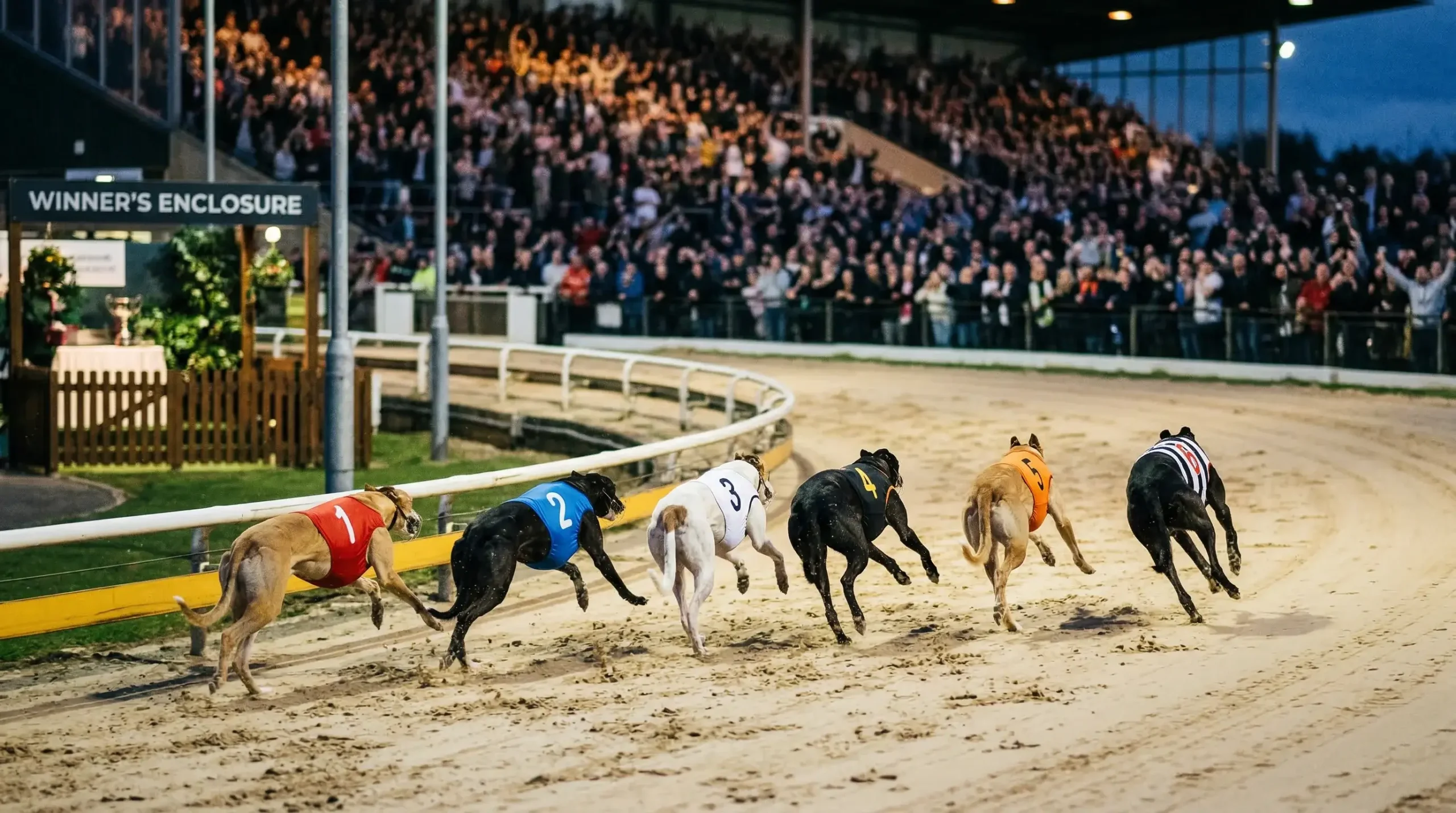
The modern English Greyhound Derby follows a knockout format across several rounds. Dogs enter through regional heats held at various tracks before converging on Towcester for the later stages. The competition typically runs over several weeks, with rounds eliminating dogs until six finalists remain for the showpiece event.
The final is contested over 500 metres at Towcester, a searching trip that demands both speed and stamina. First prize of £175,000 makes this the richest greyhound race in Britain by a considerable margin, with prize money also paid to placed dogs and earlier round winners. The total purse for the competition reaches well into six figures, attracting the best dogs from across the British Isles.
Entry criteria require dogs to be racing at open or high-grade level. The competition attracts entrants from across Britain and Ireland, with Irish-trained dogs historically performing well in the race. Trainers plan their dogs’ seasons around the Derby, timing preparation to peak for this one event. Everything else becomes secondary when Derby time approaches.
The Derby final receives extensive media coverage by greyhound racing standards. Racing Post and specialist publications dedicate significant space to previews and analysis. Television coverage ensures the race reaches beyond the trackside audience, while online streaming expands the potential viewership further. For one night, greyhound racing commands attention beyond its regular audience.
Betting interest peaks around Derby time. The ante-post markets open weeks before the final, with dogs’ odds fluctuating as they progress through the rounds. The form shown in earlier heats shapes market confidence, though Derby finalists often include at least one surprise package that emerged unexpectedly through the competition. Backing an outsider to Derby glory offers value that catches the imagination of punters willing to take a speculative position.
Notable Winners
Derby winners become legends. Mick the Miller won consecutive titles in 1929 and 1930, becoming the first greyhound to achieve the double and establishing himself as the most famous racing dog in British history. His fame extended beyond the track, appearing in a film and becoming a household name at a time when greyhound racing rivalled football for public attention. His mounted body can still be seen at the Natural History Museum in Tring.
Patricia’s Hope achieved the same feat in 1972 and 1973, trained by Adam Jackson at Wimbledon. The brindle bitch dominated her era, winning the Derby twice and cementing her status among the all-time greats. No dog since has managed to win consecutive Derbies, though several have come close. The double remains greyhound racing’s most elusive achievement.
Irish-trained dogs have won the Derby numerous times, reflecting the close connection between British and Irish greyhound racing. Top Irish kennels regularly target the race, sending their best prospects across the water for the competition. The quality of Irish breeding, with over 80 per cent of dogs racing in Britain originating from Irish lines, feeds directly into Derby competition. This cross-channel rivalry adds spice to the event.
Recent decades have seen trainers like Charlie Lister, Graham Holland, and Pat Buckley feature prominently in Derby results. Their success reflects the concentration of top talent among a relatively small number of elite operations. Winning the Derby remains the highest achievement for any trainer, the race that defines careers and ensures lasting recognition within the sport.
The GBGB maintains records of all Derby winners, a roll of honour stretching back nearly a century. These names represent the finest greyhounds ever to race in Britain, dogs whose speed and courage earned them immortality in the sport’s history. Future champions will join this list, their names added to a tradition that shows no sign of ending anytime soon.
The English Greyhound Derby endures because it represents something worth celebrating. Speed, competition, and the pursuit of excellence have always drawn crowds, and they always will. When the next Derby final unfolds at Towcester, six dogs will have the chance to write their names into history. That is the magic of the race, and why it remains the event that matters most in British greyhound racing.