
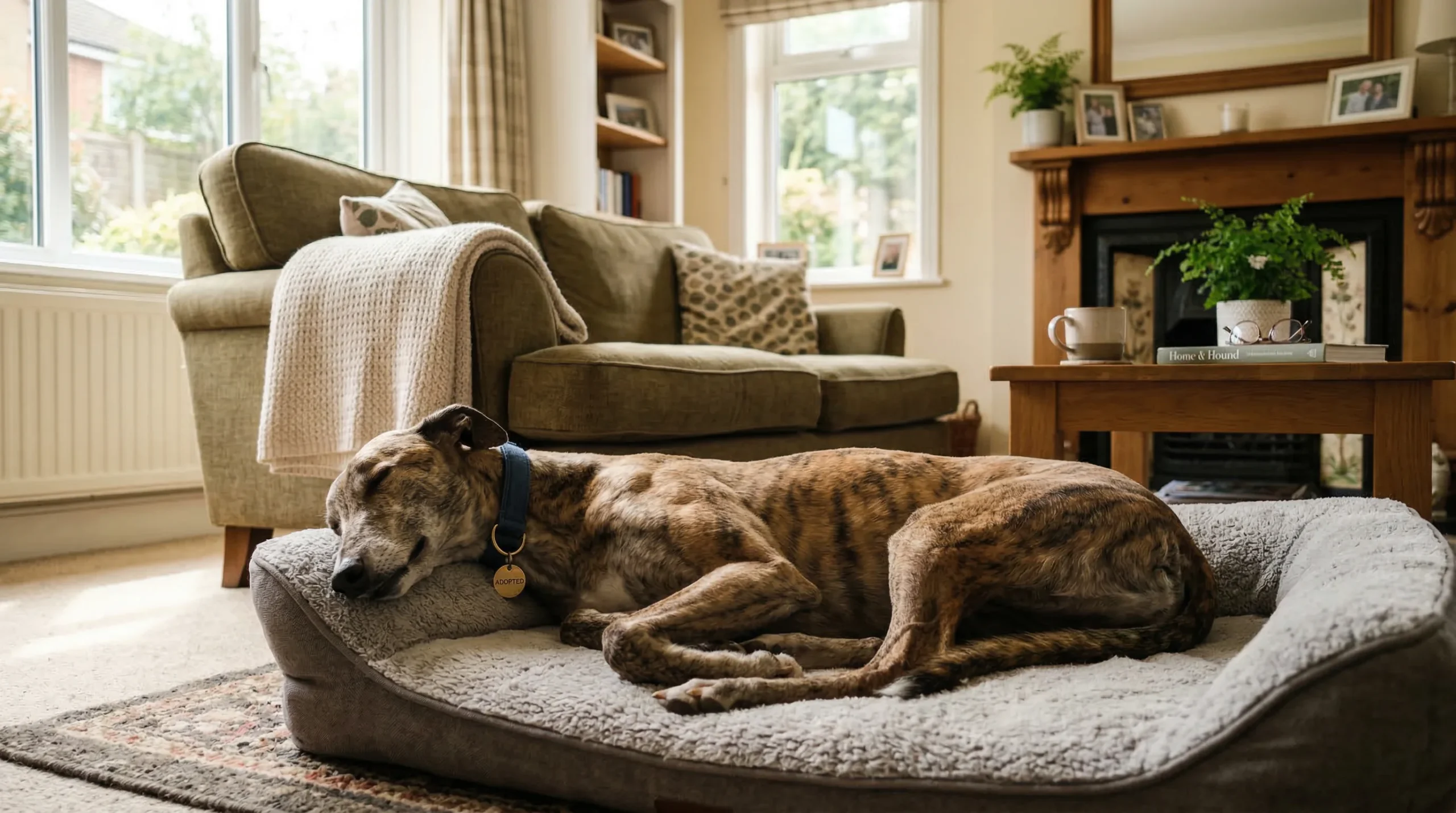
Retired racing greyhounds make excellent pets for the right households. These gentle, affectionate dogs adapt well to home life despite their athletic backgrounds. The transition from kennel to couch suits their naturally calm temperament, surprising many first-time owners who expect constant activity from such obviously athletic animals capable of reaching speeds over 40 miles per hour. The wider context is set out in our UK greyhound track results guide.
Adoption rates have increased significantly, with a 37 per cent rise in greyhounds going to new homes through charitable organisations in recent years. This growth reflects both improved rehoming infrastructure across the country and growing awareness that retired racers offer something special as companions. More dogs are finding homes than ever before in the sport’s history.
This guide covers the practical aspects of adopting a retired greyhound: navigating the application process with rehoming organisations, preparing your home appropriately, and helping your new dog settle successfully into domestic life.
Application Process
The adoption process typically begins with an enquiry to a rehoming organisation. The Greyhound Trust operates branches across Britain, while independent rescues serve specific regions with their own local expertise. Initial contact usually involves discussing your circumstances and what you are looking for in a dog.
Most organisations require application forms gathering information about your household, garden, other pets, work patterns, and lifestyle. Honest answers help rescue staff match you with appropriate dogs. A household with cats needs a different dog than one without small animals. Children influence matching decisions, as does whether you live in a flat or house. The goal is successful placement, so accurate information serves everyone’s interests.
Home checks form a standard part of the process at reputable organisations. A representative visits to assess your property’s suitability for a greyhound. They check garden security, discuss living arrangements, and answer questions you might have about the breed. Home checks are not inspections designed to catch you out but conversations to ensure good matches and identify any preparations needed before a dog arrives.
The success rate for placements is high, with 94 per cent of retired greyhounds successfully placed in new homes through the formal rehoming system. This figure reflects the care taken in matching dogs to households by experienced staff. Failed adoptions hurt dogs emotionally and disappoint families, so organisations invest considerable effort in getting matches right the first time.
Waiting times vary by organisation and your specific requirements. If you are flexible about age, colour, and gender, placement might happen relatively quickly. Specific requests take longer to match. Some organisations maintain waiting lists, contacting you when appropriate dogs become available. Patience serves the goal of finding the right dog rather than rushing to adopt any dog quickly.
Home Preparation
Garden security deserves attention before bringing a greyhound home. These dogs can jump higher than many expect, and their instinct to chase means an unsecured garden risks escape. Fencing of at least five feet helps, though some organisations recommend six feet for safety. Gates need secure latches that dogs cannot nudge open accidentally.
Inside the house, greyhounds need comfortable resting places. Their thin skin and lean bodies make soft bedding important rather than optional. Many owners provide dedicated dog beds in living areas where the family spends time together. Greyhounds are social dogs that want to be near their people, so bedroom access often features in settling arrangements during early weeks.
Stairs can challenge greyhounds initially. Racing kennels typically have single-level layouts, so dogs may never have encountered stairs before arriving at your home. Some adjust quickly while others need gradual introduction and confidence building over time. Planning for this possibility helps avoid early frustrations.
Food and water bowls, collar and lead, and basic supplies should be ready before the dog arrives. Rehoming organisations often provide initial supplies or recommend specific products based on experience. Raised feeding stations benefit greyhounds’ long necks, reducing strain during meals and improving digestion.
If you have other pets, consider carefully how introductions will work. Cats require particularly careful management, as some greyhounds have strong chase instincts while others coexist peacefully. Rescue staff assess cat compatibility and can advise on introduction protocols for dogs deemed suitable for cat households. Never assume compatibility without proper assessment.
Settling In
The first weeks establish patterns that shape your ongoing relationship with your new dog. Greyhounds often experience confusion initially, having known only kennel life and racing routines for their entire lives. Patience and consistency help them understand their new world. Rushing the process creates anxiety that takes longer to resolve than gradual, supportive introduction.
House training varies by individual. Some dogs arrive house trained from their kennel routines; others need guidance in the home environment. Greyhounds are generally clean dogs that learn quickly once they understand expectations. Frequent garden access during initial weeks prevents accidents while good habits establish.
Exercise needs surprise many new owners. Despite their racing backgrounds, retired greyhounds are typically content with moderate daily walks rather than hours of activity. Two twenty-minute walks suit most dogs well. Off-lead exercise requires secure, enclosed spaces until recall is reliable, and some greyhounds never develop safe recall due to their strong chase instincts that override training.
Sleep dominates greyhound life more than most breeds. These dogs sleep 16-18 hours daily, often more during settling periods. The racing schedule involved intense activity followed by extended rest; retired dogs maintain the rest without the activity. Accepting this pattern rather than trying to energise sleeping dogs respects their nature.
As Mark Bird, GBGB Chief Executive, has emphasised, putting a greyhound to sleep for economic reasons is unacceptable. The commitment to rehoming means dogs leaving racing deserve genuine second careers as companions in loving homes. Adopters complete this welfare chain, providing the homes that give meaning to industry rehoming efforts. Where to apply is listed in the rehoming centres.
Support continues after adoption at most reputable organisations. Phone advice, follow-up visits, and online communities connect adopters with experience and guidance. Using these resources helps with challenges that arise and celebrates the joys of greyhound ownership with others who understand the breed’s particular appeal.
