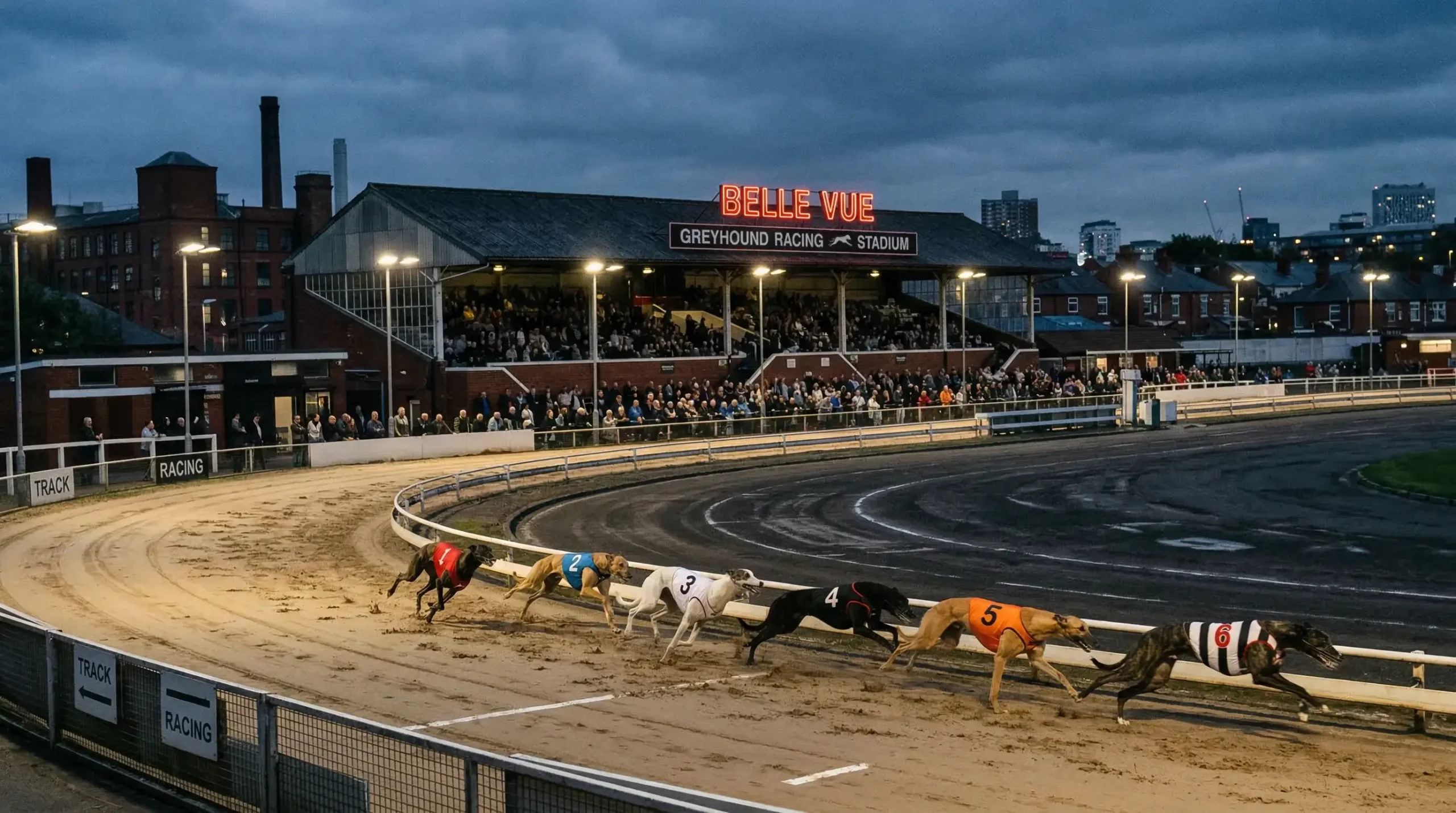
Belle Vue Stadium in Manchester holds a unique place in British sporting history. On 24 July 1926, this venue hosted the first oval track greyhound race ever staged in Britain. That single event launched an industry that would grow to attract 75 million annual spectators at its peak and reshape working-class entertainment across the nation. No other track can claim this founding status. The wider context is set out in our UK greyhound track results guide.
Nearly a century later, Belle Vue continues to race greyhounds. The stadium has evolved through multiple incarnations, including closure and rebuilding, but the connection to that founding moment remains unbroken. Visiting Belle Vue means standing where British greyhound racing began, watching dogs chase the mechanical hare on the same site that invented the modern sport for British audiences.
This guide explores Belle Vue’s origins, its current operation as one of 18 licensed tracks nationwide, and the major events that make this Manchester venue a must-visit destination for serious followers of greyhound racing.
The 1926 Origins
American entrepreneur Charles Munn brought oval track greyhound racing to Britain after seeing the sport flourish in the United States. He partnered with the General Greyhound Racing Club and selected Belle Vue as the location for the first British meeting. The Manchester venue already existed as an entertainment complex, making it an ideal site for launching a new attraction.
That July evening in 1926 drew a crowd of around 1,700 spectators, modest by later standards but remarkable for something entirely new. The mechanical hare, an essential innovation that made oval racing possible, circled the track on a rail. Six dogs chased it around the bends, and a new British obsession was born.
The sport exploded in popularity almost immediately. Within months, tracks opened across Britain to meet demand. By the time attendance peaked in 1946 at 75 million visits annually, greyhound racing had become the second most popular spectator sport in the country after football. Workers who could not afford football tickets or horse racing found greyhound meetings accessible and exciting.
Belle Vue remained at the centre of this boom. The stadium hosted major competitions, attracted top dogs and trainers, and set standards that other tracks followed. Its pioneering status gave it cachet that newer venues could not match. Racing at Belle Vue meant racing where the sport itself had started.
The golden age could not last indefinitely. Television, changing social patterns, and competition from other entertainment gradually reduced attendance from the post-war peak. Many tracks closed. Belle Vue itself went through difficult periods, including a closure between 1958 and 1980 when the original stadium was demolished. But racing returned, and Belle Vue survived when many others did not.
The current Belle Vue Stadium opened in 1987 on a site adjacent to the original location. Though physically distinct from the 1926 venue, it carries the name and the historical legacy. Dogs racing at Belle Vue today compete at the birthplace of British greyhound racing, even if the exact spot has shifted over the decades.
The Modern Venue
Today’s Belle Vue Stadium operates as one of 18 GBGB-licensed tracks in Britain. The venue sits within the larger Belle Vue entertainment complex in the Gorton area of Manchester, maintaining connections to the pleasure garden traditions that predated greyhound racing at the site by many decades.
The track measures approximately 400 metres in circumference, with racing distances including 260, 450, 635, and 835 metres. This range allows for both sprint racing and longer staying events, giving the track programming flexibility across its meetings. The surface is maintained according to GBGB standards, with regular inspections and professional groundskeeping to ensure consistent racing conditions.
Facilities have been updated over the years while retaining the atmosphere of a traditional greyhound venue. The grandstand offers covered viewing, bars and restaurants serve throughout meetings, and on-course bookmakers operate alongside tote betting. The scale is manageable, creating an intimate experience where regulars know each other and visitors can feel part of the community quickly.
Belle Vue races on Saturday and some weekday evenings, with occasional daytime meetings for BAGS coverage broadcast to betting shops across Britain. The Saturday meetings tend to attract the largest crowds, drawing racing enthusiasts from across Greater Manchester and beyond. The stadium’s location makes it accessible by public transport, with nearby stations serving the Greater Manchester rail network for those travelling from outside the immediate area.
Critics of greyhound racing point to welfare concerns across the industry. Eve Massie Bishop of OneKind has stated that the sport has cost the lives of 3,957 dogs since 2017, citing data that advocates use to argue for greater scrutiny or outright bans. Belle Vue, like all GBGB tracks, operates under welfare regulations designed to address these concerns, though debate continues about whether current standards go far enough.
Major Events
Belle Vue hosts several prestigious competitions that draw the best dogs from across Britain and Ireland. The Scurry Gold Cup is the track’s flagship event, a sprint competition that tests pure speed over the shortest distances. Winners of the Scurry Gold Cup join a roll of champions stretching back decades, their names recorded in the sport’s history.
The Belle Vue Laurels is another major fixture, a staying competition that demands stamina alongside speed. The longer distance separates the genuine stayers from those whose ability is limited to sprints. Different dogs excel at different distances, and the Laurels identifies the best over middle to longer trips where pace alone is not enough.
These events attract open race quality fields, bringing together dogs that might normally compete at different tracks. The prize money justifies travel and entry costs, while the prestige of winning at Belle Vue adds value beyond the financial reward. Trainers target these competitions with their best dogs, planning seasons around the Belle Vue calendar.
Beyond the headline events, Belle Vue runs regular graded racing that provides the backbone of its schedule. These everyday cards give dogs competitive opportunities at their level while generating the betting interest that keeps the sport financially viable. The mix of prestige events and routine racing characterises all successful tracks.
Visiting Belle Vue for a major meeting offers a different experience from ordinary race nights. The atmosphere intensifies, the crowds grow, and the quality of racing reaches a higher level. These occasions capture something of what greyhound racing meant in its golden age, when tracks filled and the competition mattered intensely to everyone present. The century that followed is in the racing timeline.
For those interested in greyhound racing history, Belle Vue is pilgrimage as much as entertainment. The stadium where British greyhound racing began continues to host the sport nearly a century later. That continuity matters in a world where so much has changed and so many tracks have disappeared forever. Belle Vue endures, connecting today’s racing to its origins in ways that no other venue can claim.
