
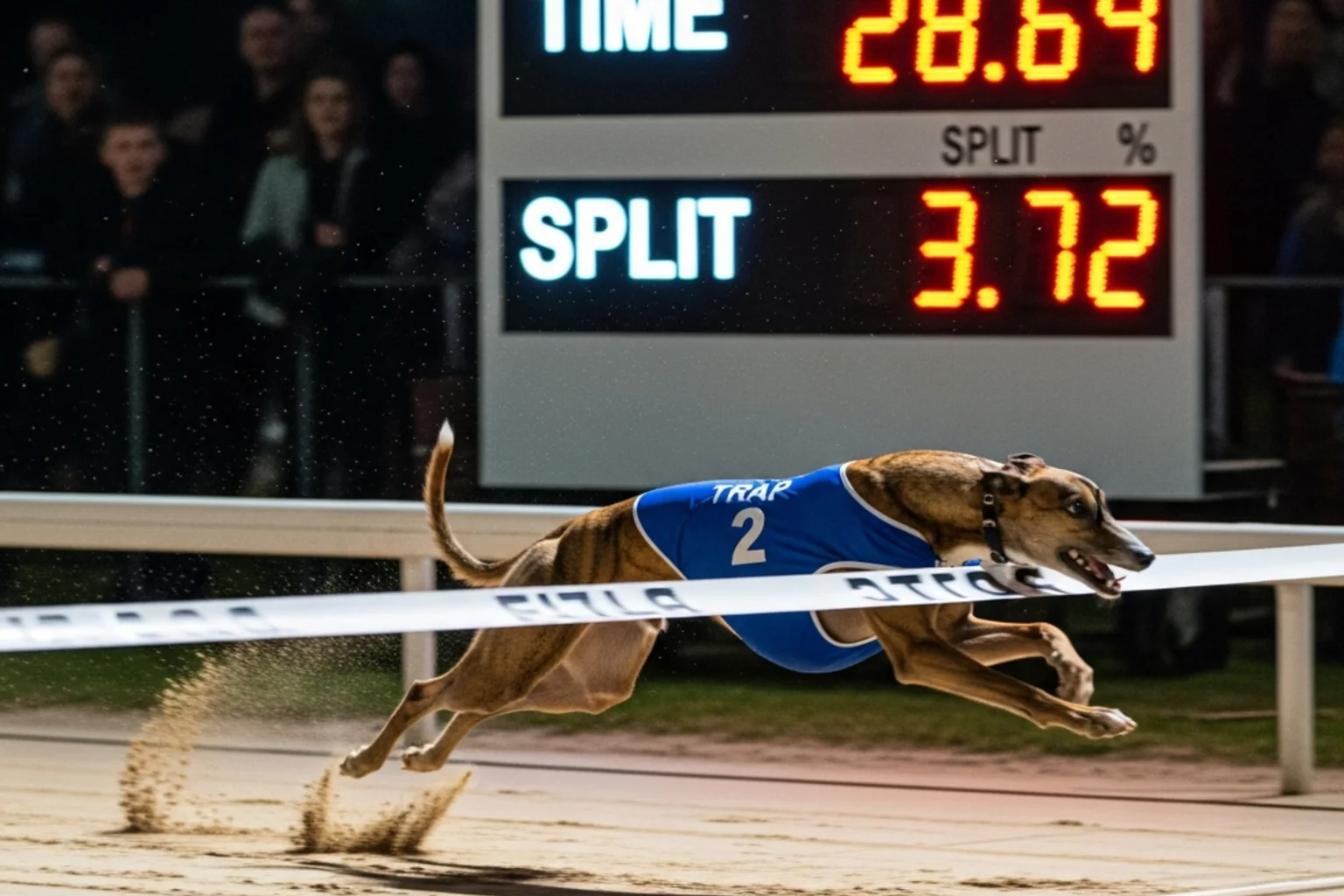
A greyhound crosses the line in 29.45 seconds. That is the actual time, the raw figure recorded by the timing system. But the racecard might show a calculated time of 29.20. What explains the difference? Understanding calculated time is fundamental to form analysis, because it allows meaningful comparisons that raw times cannot provide. The wider context is set out in our UK greyhound track results guide.
Calculated time exists to level the playing field between different conditions and tracks. A fast time on a slow surface means more than the same time on a fast surface. A run at one track cannot be directly compared to a run at another without adjustment. Calculated time provides a standardised measure that accounts for these variables, giving punters a common currency for assessing performances across different circumstances.
The system is not perfect. No mathematical adjustment can fully capture the reality of racing on different surfaces in different conditions. But calculated time represents the best available tool for comparing performances, and understanding how it works gives you a significant advantage in form analysis.
Calculated Time vs Actual Time
Actual time is simple. The clock starts when the traps open and stops when the first dog breaks the beam at the finish line. This raw data tells you exactly how long the race took. However, it says nothing about the conditions under which that time was recorded.
Calculated time applies adjustments to create a standardised figure. The primary adjustment accounts for the going, which is the condition of the running surface. On a slow track, all dogs run slower than they would on a fast track. Calculated time removes this variable by applying a correction factor based on how the track was running that day.
The going is typically assessed using trial races early in the meeting. Experienced officials compare the times recorded in these trials against expected standards for dogs of known ability. If the track is running slow, a positive adjustment is applied, reducing the calculated time. If the track is running fast, a negative adjustment might be applied, though this is less common.
Track maintenance standards ensure surfaces are consistent, with the Sports Turf Research Institute conducting over 80 visits to GBGB tracks in 2024 to monitor conditions. These inspections help maintain the baseline standards against which going adjustments are measured. Without consistent surfaces, the calculated time system would lose its reliability.
The calculated time system also accounts for wind and weather where significant. A strong headwind in the home straight slows all runners, which the adjustment can factor in. Heavy rain during a meeting changes the surface as the night progresses, potentially requiring different corrections for early and late races.
Form guides typically display both actual and calculated times, allowing punters to see the raw data alongside the adjusted figure. Some focus primarily on calculated times for comparisons, while others prefer to make their own assessments using actual times combined with knowledge of the going.
Going Adjustments
The going scale runs from fast through standard to slow. Most tracks aim to provide standard going, where times should match established benchmarks. When conditions deviate from standard, adjustments are applied to bring calculated times back in line.
A track might be running slow by half a second over a standard 480-metre trip. In this case, 0.50 seconds would be subtracted from each dog’s actual time to produce the calculated time. A dog running 29.80 on that night would show a calculated time of 29.30, reflecting what it might have run on a standard surface.
Weather is the primary factor affecting going. Rain softens the sand, creating drag that slows dogs down. The amount of rain, how recently it fell, and how well the track drains all affect the impact. Dry, cold weather can harden the surface, potentially producing fast going. Hot weather can also affect conditions, particularly if the sand becomes loose and shifty.
Track maintenance between races affects conditions too. Staff rake and water the surface to maintain consistency. The quality of this maintenance varies, and tracks with better groundskeeping tend to show more consistent going across meetings. Regular STRI inspections help ensure standards are maintained.
Going descriptions in form guides use terms like normal, slow, or very slow. These are subjective assessments based on how the track was running compared to expectations. A slow track is not necessarily problematic, but punters need to know about it to interpret times correctly.
Some dogs handle different going better than others. A strong, powerful dog might motor through slow ground while a lighter dog struggles. Conversely, fast ground might suit the lighter, quicker type. Watching for patterns in how a dog’s form changes with different going is a useful angle for form study. Some trainers become adept at reading conditions and placing their dogs appropriately, which is worth noting when you see a kennel sending runners to meet specific conditions.
Comparing Times Across Tracks
Britain has 18 GBGB-licensed stadiums, and no two are identical. Track circumferences vary, affecting the distance dogs run through the bends. Some tracks have tighter turns, others have more gradual curves. The surface composition differs, as do the running characteristics. All of this makes direct time comparisons between tracks problematic without adjustment.
Each track has established standard times for its various distances. A standard 480-metre time at Monmore differs from the standard at Romford because the tracks themselves differ. Calculated time systems account for these variations by applying track-specific corrections that bring times into alignment.
When a dog transfers between tracks, assessing its form requires understanding these differences. A dog running 29.50 at one track might be equivalent to 29.30 at another, or 29.70. The calculated time system attempts to bridge these gaps, but experienced punters also develop intuitive senses for how times translate between venues they follow regularly.
Some tracks are known as fast tracks where quick times are common. Others are noted as harder to record fast times on. This reputation often reflects the track characteristics more than the quality of the racing. A track with a tight first bend, for instance, might produce slower times because dogs lose momentum negotiating it. The bend radius affects how much dogs need to check their speed, which feeds through into overall times.
Sectional times add another layer of analysis. Rather than just looking at overall times, you can examine how fast a dog ran to the first bend, through the middle of the race, and home. These sectionals reveal pace patterns that overall times obscure. A dog running slow sectionals early but fast sectionals late is a different proposition from one that does the opposite. For punters seeking an edge, sectional analysis often proves more revealing than headline times. The conditions it corrects for are in going explained.
The calculated time system, for all its sophistication, remains an approximation. No adjustment formula can perfectly capture the nuances of different tracks and conditions. Punters who combine calculated times with track knowledge, going awareness, and sectional analysis build a more complete picture than those relying on any single measure. Times are tools for understanding form, not definitive judgments of ability. Use them wisely, and they will serve you well in identifying value and assessing chances.
