
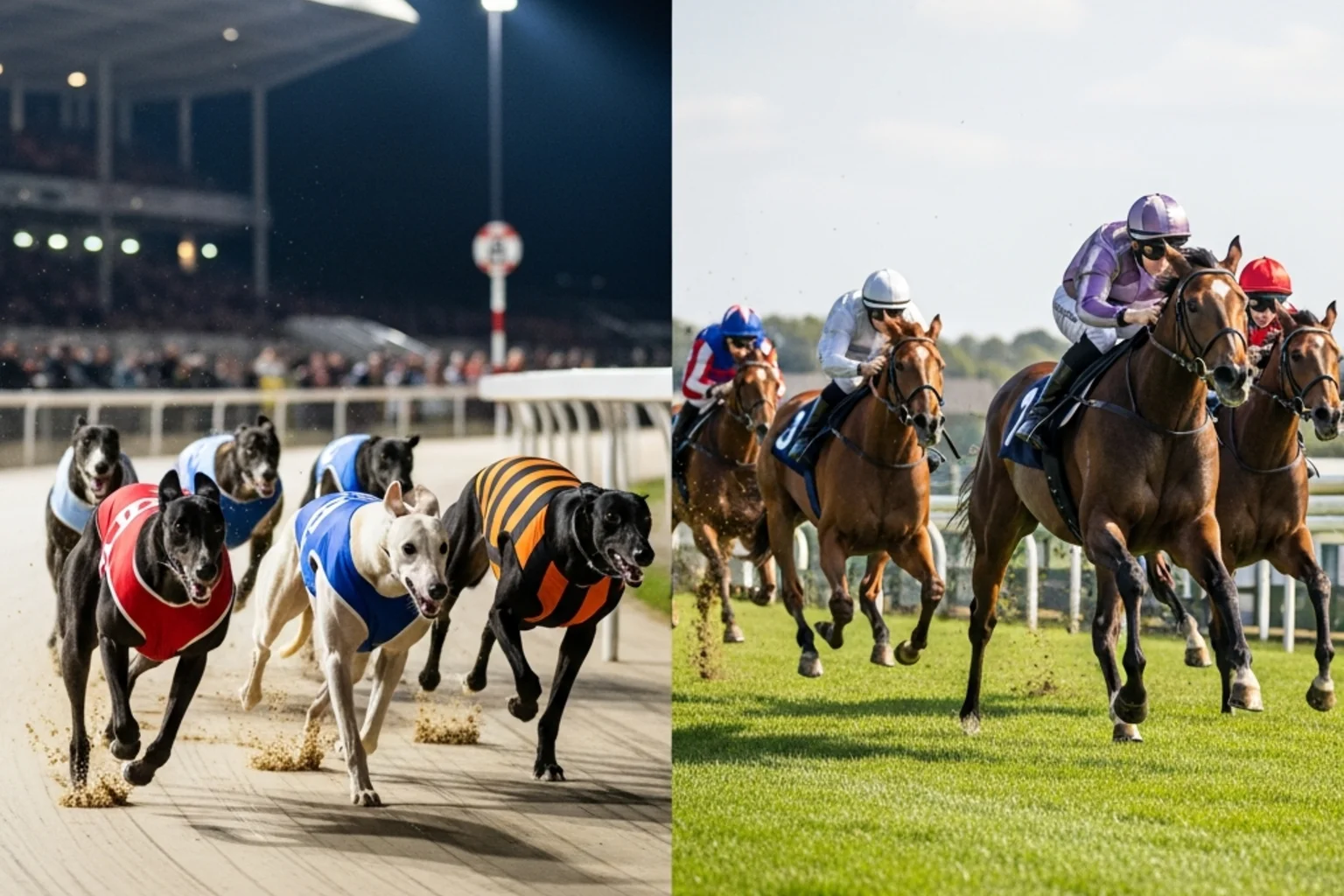
Greyhound racing and horse racing both involve animals competing around tracks while spectators watch and wager, but the similarities obscure fundamental differences in how these sports operate. Understanding how these sports compare helps newcomers choose where to focus their attention and gives experienced fans context for the traditions they follow. The wider context is set out in our UK greyhound track results guide.
Britain maintains 18 GBGB-licensed greyhound tracks alongside approximately 60 racecourses hosting horse racing under British Horseracing Authority rules. Both sports have deep roots in British culture stretching back generations, though their scales, formats, and public profiles differ substantially in the modern era.
This guide compares the two sports across format, betting markets, and welfare dimensions, highlighting both key differences and unexpected similarities between these related but distinct racing traditions.
Format Comparison
Greyhound races are short and frequent. Six dogs typically contest each race, running distances between 200 and 1000 metres in times ranging from roughly 15 to 60 seconds depending on distance. A typical evening meeting includes 12-14 races with intervals of about 15 minutes between them. The entire experience lasts around three hours with continuous action throughout the card.
Horse racing spreads fewer races across longer periods with more downtime. A standard meeting might feature six to eight races with intervals of 30-40 minutes between them. Individual races last longer, from around one minute for sprints to over ten minutes for extreme staying events like the Grand National. The pace is more measured, allowing extended analysis and socialising between races.
Field sizes differ consistently between the sports. Greyhound races almost always involve exactly six runners due to the trap system that limits starting positions. Horse racing fields vary from small fields of four or five in some conditions races to 30 or more in major handicaps like the Grand National. This variation creates different analytical challenges for punters.
Scheduling reflects different commercial models. Greyhound racing happens daily, with multiple tracks racing each evening and BAGS meetings filling daytime slots for betting shop content. Horse racing concentrates more heavily on weekends with fewer midweek fixtures at most courses. The greyhound model produces more content but arguably less prestige per individual race.
Attendance patterns differ accordingly. Horse racing draws larger crowds for major meetings, with festivals like Cheltenham and Royal Ascot attracting tens of thousands daily. Greyhound tracks rarely approach such numbers but maintain steady attendance across more frequent meetings. The cumulative attendance might be comparable even if individual meeting sizes favour horses.
Betting Differences
Betting turnover on greyhound racing reaches approximately £1.5 billion annually in the UK. Horse racing attracts substantially more, with estimates suggesting turnover several times higher. Both sports depend heavily on betting for their commercial viability and continued operation, but horses command greater public interest and wagering volume overall.
Market depth differs between sports considerably. Horse racing betting markets are deeper, with more money traded and tighter margins on prices. Greyhound markets are thinner, meaning large bets can move prices more significantly. This creates different opportunities and challenges for serious punters in each sport.
Betting options are broadly similar across both sports. Win, place, forecast, and tricast bets feature in both sports. Horse racing adds more exotic bets like Scoop6 and Placepot with larger prize pools reflecting greater turnover. Tote betting exists in both sports, though the Tote plays a larger role in horse racing pools.
Information availability clearly favours horse racing. Extensive media coverage, published ratings from multiple providers, and detailed form analysis support horse racing punters who want guidance. Greyhound racing receives less media attention, meaning serious punters must often conduct their own research rather than relying on published analysis from professionals.
The levy system funds both sports from betting turnover, connecting commercial betting activity to sport funding. Bookmakers contribute percentages that support prize money, facilities, and welfare programmes. The British Greyhound Racing Fund receives 0.6 per cent of greyhound betting turnover, while horse racing receives a higher percentage through its levy arrangements.
Welfare Statistics
Welfare comparisons between the sports involve contested statistics and differing methodologies that make direct comparison genuinely difficult. Both sports face scrutiny over animal welfare, with critics arguing that racing inherently involves unacceptable risk while defenders point to improving standards and genuine care from most participants involved.
Fatality rates provide one comparison point, though the sports report these differently using various methodologies. Greyhound racing reports a fatality rate of approximately 0.03 per cent of runners, while horse racing figures suggest approximately 0.18-0.22 per cent of runners suffer fatal injuries across all types. These numbers suggest greyhound racing is statistically safer per start, though critics of both sports argue any preventable death is unacceptable regardless of rate.
Injury rates beyond fatalities also feature prominently in welfare discussions. Greyhound racing reports overall injury rates around 1 per cent of runners, with most injuries being minor and allowing full recovery. Horse racing injury statistics are harder to compare directly due to different reporting standards between jurisdictions and race types.
Post-career welfare differs significantly between species. Retired greyhounds need rehoming as pets, creating an ongoing obligation that the industry addresses through charitable organisations and funding programmes. Retired racehorses face varied fates depending on their value, with some continuing in other equestrian disciplines while others face uncertain outcomes if they cannot be rehomed.
As Mark Bird, GBGB Chief Executive, has emphasised, putting a greyhound to sleep for economic reasons is unacceptable. This position reflects industry commitment to welfare outcomes that extend beyond racing careers. Horse racing faces similar ethical questions about what happens to horses no longer valuable enough to justify their keep. The betting side is compared in greyhound betting types.
Both sports have increased welfare focus in recent years under public pressure and internal recognition that standards needed improvement. Whether current standards satisfy critics remains contested, but both industries point to declining injury rates and improved care as evidence of genuine progress on welfare concerns.
