
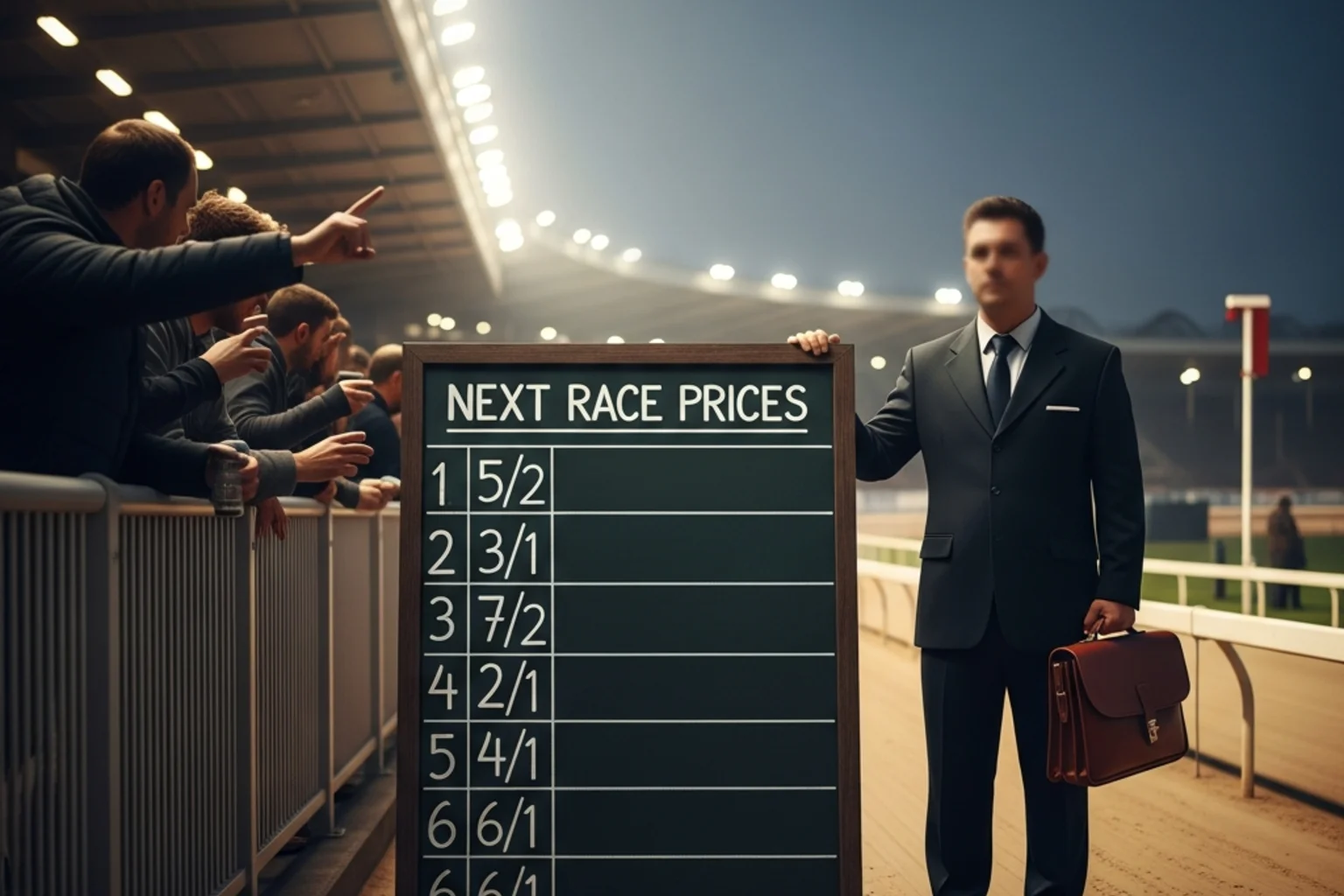
Greyhound racing odds reflect bookmakers’ assessments of each dog’s winning chances, adjusted to ensure profit margins regardless of outcomes. Understanding how these prices form helps punters identify value and avoid traps set by the market. The process combines form analysis, market dynamics, and commercial calculations in ways that reward those who understand the mechanics. The wider context is set out in our UK greyhound track results guide.
With approximately £1.5 billion wagered on greyhound racing annually in the UK, the odds-setting process matters commercially to everyone involved. Bookmakers need prices that attract bets while protecting their margins. Punters seek prices that undervalue genuine chances. This tension drives the market dynamics that determine what odds appear on screens and boards.
This guide explains how greyhound racing odds are formed, the differences between betting venues, and how Best Odds Guaranteed promotions affect punter returns.
Market Formation
Bookmakers employ traders who assess greyhound races and set opening prices. These traders analyse form, times, trap draws, trainer patterns, and any other relevant factors to estimate winning probabilities for each runner. They then convert these probabilities into odds, building in a margin that ensures the book favours the layer regardless of which dog actually wins.
Opening prices appear before betting begins, giving punters early opportunities to find value before market movements adjust initial assessments. Experienced punters watch for opening prices that seem wrong based on their own analysis, backing dogs they believe are undervalued before the market corrects. This early betting itself influences prices, as bookmakers shorten odds on dogs attracting money and drift those being ignored.
The margin built into odds varies by bookmaker and market competitiveness. A theoretical fair book where all probabilities sum to 100 per cent would offer no bookmaker edge. Real books typically sum to 115-130 per cent, with the excess representing the bookmaker’s theoretical margin on each race. Lower margins mean better value for punters, making margin comparison worthwhile when choosing where to place your bets.
Market movements reflect betting patterns across all channels. When significant money backs a particular dog, its odds shorten while others drift to maintain the book’s balance. Sharp punters, those whose opinions bookmakers respect based on track records, can move markets with relatively modest stakes. Public money, while larger in volume, often arrives later and has less impact on prices already shaped by professional action.
The final starting price represents the odds at race time, after all market movements have played out. This SP becomes the official price for settling bets where punters took starting price rather than fixed odds. Understanding that SP reflects accumulated market opinion helps interpret what it means when dogs start at prices very different from their morning assessments.
On-Course vs Off-Course
On-course bookmakers operate at tracks, chalking prices on boards and taking cash bets from attending punters. Their odds reflect local market conditions, including information available only at the track that remote punters cannot access. On-course layers see which dogs look fit in the paddock, hear whispers about trainer expectations, and adjust prices based on this immediate intelligence.
Off-course betting happens through betting shops and online platforms, removed from trackside information flows. Off-course odds are set by head office traders using form analysis and market data rather than trackside observation. The prices may differ from on-course offerings, creating arbitrage opportunities for those able to compare markets quickly.
Betting shops display odds on screens fed by central systems. These prices change in response to overall market movements rather than local shop activity. A bet placed in London affects the same market as one placed in Manchester or anywhere else. This centralisation creates uniform pricing but loses the local market character of on-course betting.
Online betting offers convenience and often competitive odds but removes the social element of track or shop betting. Online platforms typically offer the widest range of betting options, including forecast, tricast, and various exotic bets that might not be available at all on-course bookmaker pitches with limited staff.
The choice between venues involves trade-offs that each punter must weigh. On-course betting provides atmosphere and immediate access to trackside information. Betting shops offer convenience and usually television coverage of races. Online platforms provide the broadest markets and often the best odds but lack human interaction. Most regular punters develop preferences based on their priorities.
Best Odds Guaranteed
Best Odds Guaranteed promotions promise that if you take a fixed price and the starting price is higher, you receive the better odds. This protection removes the risk of taking an early price only to watch the odds drift, leaving you holding worse odds than those available at race time.
BOG typically applies to win bets placed at fixed odds before the race begins. The terms vary between bookmakers, with some applying limits on maximum payouts or restricting the promotion to certain races or bet types. Reading the specific terms before assuming BOG applies helps avoid disappointment.
The promotion benefits punters who identify value early. Without BOG, taking early prices involves risk that the market might drift, making your fixed odds look poor compared to SP. With BOG, you keep your early price if it proves better than SP but upgrade to SP if the market moves in your favour. This asymmetry clearly favours the punter.
Bookmakers offer BOG as a competitive tool to attract customers despite the cost. The promotion is not free for operators; they pay out more when SPs exceed fixed odds taken. Commercial calculations determine that the customer acquisition and retention benefits justify this expense, at least for now.
A portion of all greyhound betting contributes to the sport through the British Greyhound Racing Fund, with bookmakers paying 0.6 per cent of turnover as a levy. This connection between betting activity and sport funding means that punters contribute to prize money, welfare initiatives, and track maintenance through their wagers, regardless of whether individual bets win or lose. The exchange equivalent is in SP versus Betfair SP.
As Mark Bird, GBGB Chief Executive, has emphasised, putting a greyhound to sleep for economic reasons is unacceptable. The betting revenue supporting the sport helps fund welfare outcomes including rehoming programmes and injury support schemes. Understanding this financial ecosystem contextualises how betting, including promotions like BOG, connects to broader industry welfare.
