
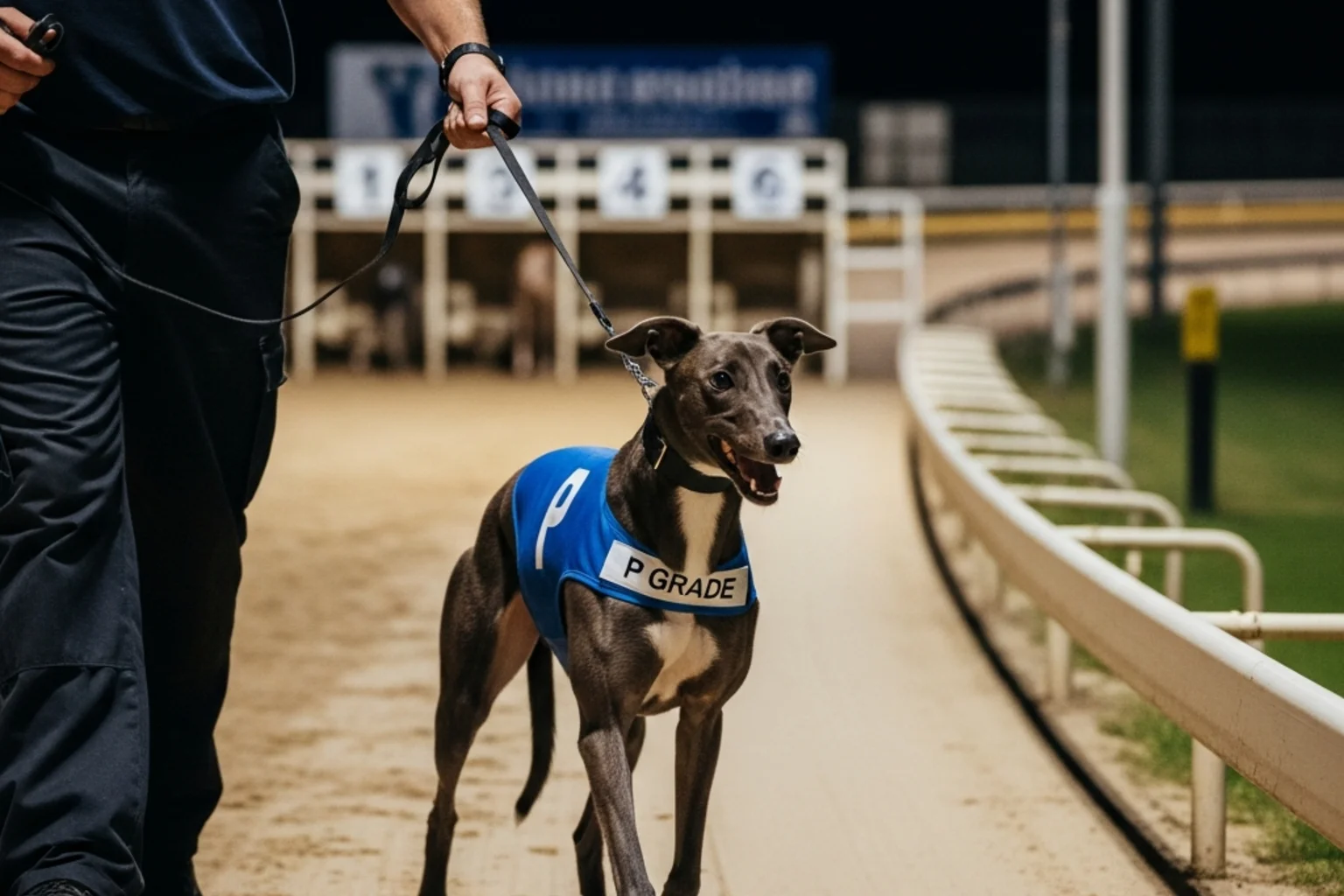
Before greyhounds compete in standard graded racing, many begin their careers in puppy races. These competitions for younger dogs provide a stepping stone between trials and full adult competition. Understanding puppy racing helps explain how dogs develop through the racing system and what form from puppy events might indicate about future potential in senior racing. The wider context is set out in our UK greyhound track results guide.
Puppy races use their own grading structure, separate from the A grades that govern adult competition. The P grade system creates appropriate competition for developing dogs, matching youngsters against others at similar stages of their racing education rather than throwing them straight into races against experienced adults who would have obvious advantages.
This guide explains age eligibility requirements for puppy racing, how P grades work to create competitive fields, and how young dogs progress from puppy competitions into senior racing careers.
Age Eligibility
Greyhounds become eligible for racing at around 15 months of age, though precise rules vary slightly between circumstances. Before racing, dogs must complete registration and pass trials demonstrating they can chase the hare safely and compete without causing problems for other runners. These prerequisites ensure that dogs entering racing have the basic competence needed for competitive racing.
Puppy status typically applies to dogs under two years of age. During this window, young greyhounds can compete in designated puppy races rather than immediately facing senior dogs with established form and experience. The age limits provide a protected period for development where inexperience is shared among competitors rather than being exploited by more seasoned runners.
With 5,899 new greyhound registrations in 2023, a substantial population of young dogs enters the system each year requiring competitive opportunities. Puppy races absorb some of this supply, providing racing education before dogs graduate to open age competition. Not all young dogs run in puppy races, however, as some trainers prefer to move promising youngsters directly into graded company where they believe the dog can compete immediately.
The age window for puppy racing is limited and non-negotiable. Dogs age out of eligibility regardless of their development or perceived readiness for senior competition. This time pressure encourages trainers to progress dogs appropriately rather than keeping them indefinitely in junior categories where competition might be softer. A dog that has not moved beyond puppy racing by the age limit must transition to adult grades regardless of preferences.
Irish imports sometimes arrive having already raced as puppies in Ireland. Their puppy form provides some indication of ability, though transferring Irish form to British tracks requires understanding the differences between jurisdictions. Age eligibility rules apply based on actual age, so recently imported young dogs might enter British racing with existing puppy form from Irish tracks.
P Grades Explained
P grades categorise puppy races by quality level, similar to how A grades structure adult racing. A P1 race features the best puppies at a track, while higher P numbers indicate lower quality competitions. This grading creates appropriate matchups, preventing the best young dogs from simply dominating weaker opponents in mismatched contests that would neither test them nor develop others.
Racing managers assign P grades based on trial performances and early racing results. A puppy showing exceptional speed in trials might enter racing at a higher P grade than one with modest trial times. As puppies race and compile form, their grades adjust based on results, moving up after wins and potentially down after poor performances.
Not all tracks offer the same range of P grades. Larger tracks with more extensive racing programmes might run P1 through P4 or beyond. Smaller tracks might have limited puppy racing, offering fewer grade distinctions. The availability of appropriate puppy races at various grades influences where trainers choose to develop their young dogs.
Puppy races often appear early on race cards, providing competitive opportunities for young dogs while building towards the main graded events later in meetings. The scheduling recognises that puppy races, while important for development, are not typically the headline attractions that draw the largest betting interest from punters.
Form from P grade races requires careful interpretation. Times recorded by puppies often improve significantly as dogs mature physically and gain competitive experience. A puppy running modest times might develop into a significantly faster adult as strength increases. Conversely, some puppies that dominate their age group fail to improve proportionally as competition stiffens in senior grades.
Progression to Senior Racing
The transition from puppy to senior racing happens automatically when dogs exceed age eligibility limits. Racing managers then assign appropriate A grades based on performances in puppy competition. Strong puppy form typically translates to starting higher in the adult grading structure, while dogs that struggled as puppies begin at lower levels.
British breeding has been increasing its share of the racing population, with 15.5 per cent of greyhounds in GBGB racing now coming from British litters in 2024. These domestically bred dogs typically enter British puppy racing from the start of their careers, progressing through local systems rather than arriving with Irish experience. Their development can be tracked entirely within British records.
Some dogs skip extensive puppy racing entirely. Trainers with obviously talented youngsters might move them directly into adult graded competition, believing they can compete immediately at senior level. This approach risks exposing inexperienced dogs to tough competition but can accelerate development for genuinely talented individuals.
The puppy-to-senior transition often reveals which dogs have genuine ability versus those that merely benefited from competing against other undeveloped youngsters. Some puppy champions struggle against adults. Others who showed potential but did not dominate puppy races flourish when physical maturity allows their ability to emerge fully.
Tracking dogs through their puppy careers and into adult racing provides insight into development patterns. Information about puppy performances is available through the GBGB and various statistical services. This historical perspective helps when assessing young adults whose senior form is still limited but whose puppy records might indicate trajectory. A first win comes in a maiden race.
Puppy racing serves its purpose as a developmental stage. The dogs that emerge successfully carry experience and conditioning that helps them compete as adults. Those that fail to progress provide early signals that long racing careers may not materialise. Either outcome demonstrates the system functioning as intended, identifying ability and sorting dogs into appropriate competitive levels.
