
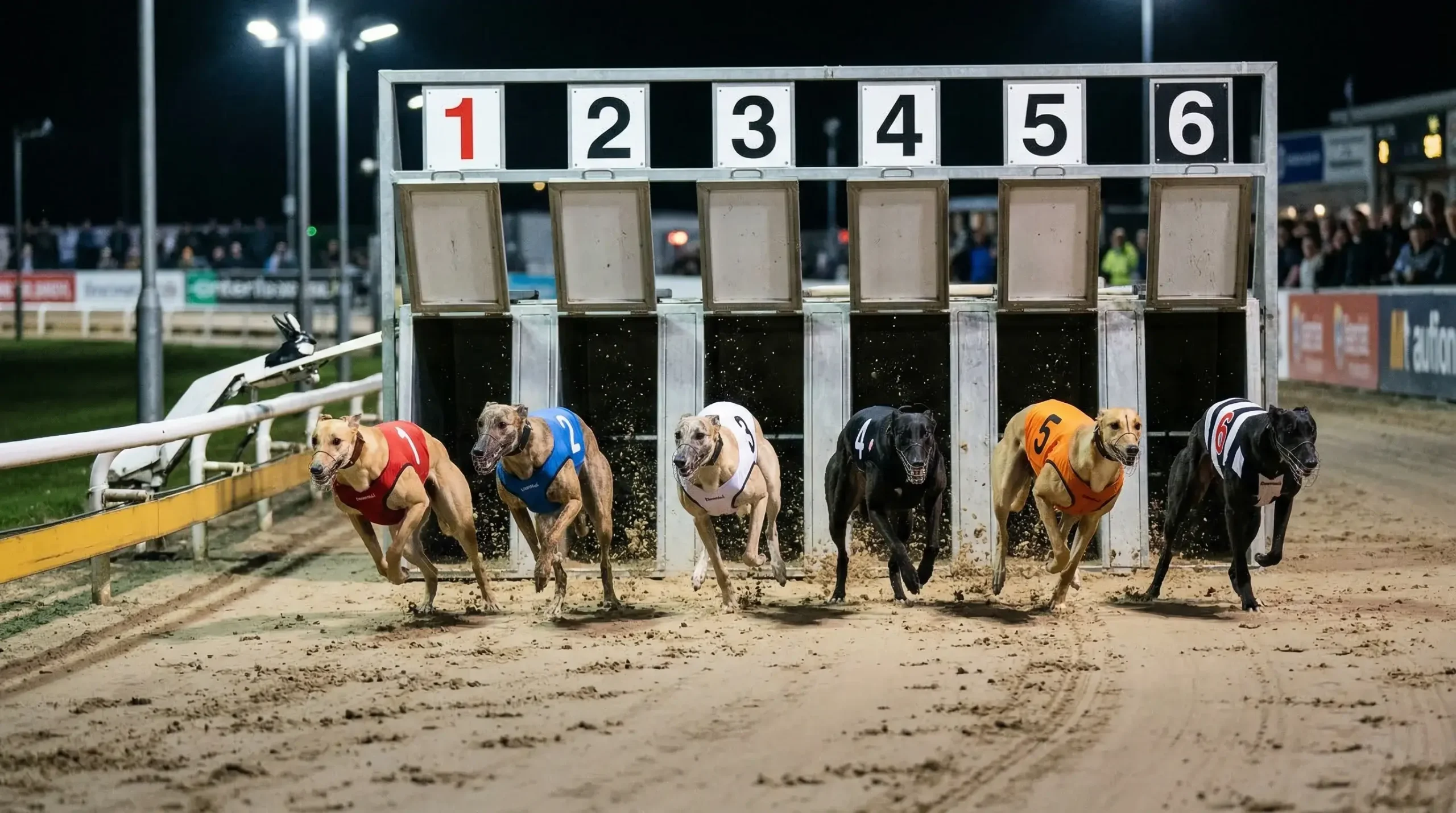
Every greyhound has a preferred way of running a race. Some blast from the traps, hit the front immediately, and dare rivals to catch them. Others settle behind the pace, conserve energy through the early stages, and produce a finishing burst. Understanding these running styles — and how they interact with trap draw, track configuration, and opposition — provides a crucial edge in greyhound form analysis. The wider context is set out in our UK greyhound track results guide.
Running style information appears on racecards through sectional times, form comments, and historical patterns. Learning to interpret this data transforms abstract numbers into a mental picture of how each race might unfold, helping identify situations where a particular running style enjoys an advantage or faces obstacles.
This guide examines the key elements of running style analysis: early pace from the traps, rails versus wide running through bends, and how trap draw interacts with these preferences to create or deny opportunities. Mastering these concepts elevates racecard study beyond simple form figures into genuine race-reading ability.
Understanding Early Pace in Greyhound Racing
Early pace refers to a greyhound’s ability to break sharply from the traps and establish position before the first bend. Dogs with strong early pace gain immediate advantages: they reach the rail first, avoid crowding, and force rivals to race around them. In the confined environment of greyhound racing, where six dogs compete in tight quarters, early pace often determines outcomes before the race properly begins.
Racecards quantify early pace through sectional times. The first sectional — typically the time to reach the first bend — reveals whether a greyhound leads, challenges, or trails in the opening phase. Consistent first-sectional times indicate reliable early pace; variable figures suggest a dog that sometimes misses the break. Timeform and similar analysts publish detailed sectional data that allows precise early-pace comparisons.
Pure speed from the traps matters, but so does trapping ability. A greyhound that walks up to the trap door slowly, or turns its head at the off, loses vital fractions even with genuine early pace. Trap comments on racecards — notations like “slow away” or “baulked start” — indicate trapping problems that might cost positions regardless of underlying ability.
Early pace greyhounds typically dominate at shorter distances where races conclude before rivals can mount comebacks. Over sprint trips, breaking in front often means staying in front. At longer distances, maintaining early pace becomes more demanding, and front-runners risk tiring before the line. Understanding which greyhounds sustain their early speed and which fade helps distinguish true front-runners from flashy beginners who cannot finish the job.
The form book reveals patterns over time. Some greyhounds always try to lead, regardless of race circumstances. Others show tactical flexibility, happy to track the pace before challenging. A dog that has led at the first bend in its last six starts will almost certainly attempt to lead again. One that has shown pace when drawn inside but settled when drawn wide might adapt its approach to circumstances.
Rails Runners vs Wide Runners
Beyond early pace, greyhounds develop preferences for racing positions through bends. Rails runners hug the inside, covering the shortest distance but risking interference from rivals cutting across. Wide runners swing to the outside, covering extra ground but enjoying clearer passage. Neither approach is inherently superior — the advantage depends on track, trap draw, and opposition.
Rails runners save ground on every bend, a significant advantage over multiple turns. A greyhound that maintains the inside line throughout a standard-distance race might cover 10-15 metres less than a wide-running rival. Over four bends, this translates to a length or more at typical greyhound speeds. However, rails running requires the speed to hold position — a slow rails runner gets swallowed by the field and loses the benefit entirely.
Wide runners sacrifice ground for freedom. Racing on the outside avoids the crowding that happens when six greyhounds funnel toward the inside rail. A dog with sustained pace can sweep around rivals on the outside, producing spectacular finishes even from unpromising positions. The trade-off is covering extra distance; wide runners need superior engines to compensate for the longer route.
Running style preferences often reflect physical characteristics. Smaller, agile greyhounds frequently excel on the rails, slipping through gaps that larger dogs cannot exploit. Bigger, more powerful types sometimes thrive wide, using their strength to overpower rivals in the closing stages. These tendencies help predict how greyhounds will handle different trap draws and track configurations.
Some greyhounds show genuine versatility, adapting their running style to circumstances. These dogs might race on the rails when drawn low and swing wide from high draws, suggesting intelligence and tactical awareness. Such versatility proves valuable because it reduces dependence on favourable trap draws — the greyhound has a plan regardless of where it starts.
How Trap Draw Affects Running Style
Trap draw interacts with running style in predictable but often underappreciated ways. A rails runner drawn in trap one enjoys the perfect setup: shortest route to the first bend with inside position naturally achieved. The same dog drawn in trap six faces a different challenge entirely, needing to cross rivals to reach preferred racing room.
Wide runners sometimes prefer higher trap draws despite the extra ground. Starting from trap five or six gives immediate access to the outside, allowing the greyhound to establish its preferred position without fighting through traffic. A wide runner drawn in trap one might actually face obstacles — it must either compromise its running style or force its way across the field, risking interference.
Crowding incidents occur most frequently in the first bend as six greyhounds converge from different starting positions. The GBGB recorded an injury rate of just 1.07% across races in 2024, but many non-injury incidents involve checking and crowding that cost positions without causing physical harm. Understanding which running styles create or avoid these situations helps predict race dynamics.
Front-runners from inside draws face straightforward tasks: break fast, claim the rail, and control the race. Front-runners from outside draws must decide whether to cross immediately — risking a trap draw disadvantage — or accept wider passage around the first bend. This decision often determines outcomes, and form students should note how individual greyhounds have handled unfavourable draws in the past.
Closers and hold-up runners depend less on trap draw because they accept early position concession anyway. A greyhound planning to settle behind the pace can do so from any trap, waiting for opportunities that arise as the race develops. However, closers still prefer certain draws at certain tracks — local knowledge about which routes provide the best late-running opportunities adds further analytical depth.
Combining running style analysis with trap draw assessment creates a framework for predicting race shapes. A card containing three early-pace greyhounds drawn inside suggests a contested lead and opportunities for closers. A race where the only front-runner draws trap six might see that dog compromise its style or struggle for position. These predictions aren’t guarantees, but they represent informed analysis rather than guesswork. The trap colours help you follow it: trap colours.
Building running style profiles for greyhounds you follow regularly pays dividends over time. Note how each dog breaks, where it prefers to race, and how it handles different trap draws. This information accumulates into genuine expertise that no racecard data can fully capture — the understanding of individual greyhound tendencies that separates serious form students from casual observers.
