
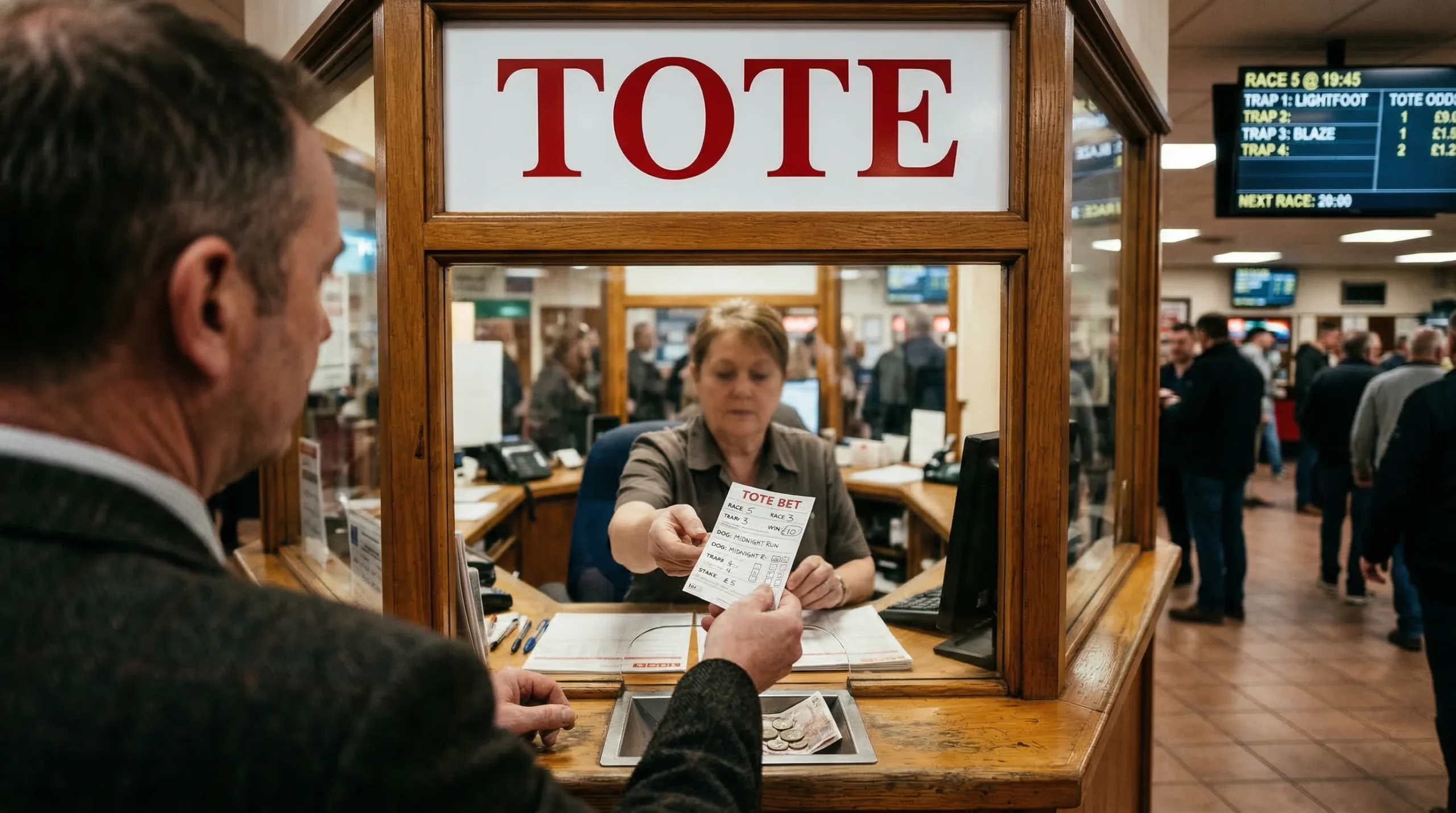
Pool betting offers an alternative to fixed-odds wagering that many greyhound racing regulars overlook. Rather than accepting odds set by a bookmaker, tote bets go into a shared pool where all punters compete against each other. The final dividend depends on how much money backs each outcome — creating the possibility of returns that significantly exceed what any traditional bookmaker would offer. The wider context is set out in our UK greyhound track results guide.
The Tote operates as Britain’s pool betting system, running alongside conventional bookmaker markets at greyhound tracks and through online platforms. Understanding how pool betting mechanics differ from fixed odds, and which bet types suit different racing scenarios, allows punters to add another dimension to their greyhound wagering.
This guide explains the pari-mutuel system, details the main tote bet types available for greyhound racing, and explores the jackpot pools that create occasional headline-worthy payouts. Whether you’re new to pool betting or looking to refine your approach, these fundamentals will help you decide when tote wagering makes sense.
How Pool Betting Works
Pool betting, sometimes called pari-mutuel betting, operates on fundamentally different principles than fixed-odds wagering. When you place a tote bet, your stake enters a pool shared with every other punter betting on that race. After the race concludes, the operator deducts its take — typically around 15-25% depending on bet type — and divides the remainder among winning bettors proportionally to their stakes.
This structure means you never know your exact return when placing the bet. If few people back the winner, the pool divides among fewer winners, producing larger dividends. If many punters support the same outcome, returns shrink as the pot spreads thinner. The tote displays indicative dividends that update as betting progresses, but final figures only emerge once the pool closes at race time.
The UK greyhound betting market generates approximately £1.5 billion in annual turnover across all channels, with tote pools capturing a modest but meaningful share of this activity. Pool betting tends to attract less liquidity than fixed-odds markets at most greyhound meetings, which affects dividend reliability — small pools can produce volatile returns based on individual large bets.
Pool mechanics create opportunities that don’t exist in fixed-odds markets. A greyhound that starts at long odds because few punters fancy it might pay substantially more through the tote than through bookmakers. Conversely, heavily backed favourites often return less through pools than their fixed-odds equivalents. Recognising these patterns allows strategic choice between betting methods.
Tote betting also removes bookmaker margin from the equation, replacing it with explicit takeout from the pool. Some punters find this transparency preferable: you know exactly what percentage the operator retains, rather than calculating implicit margin from fixed odds. Whether pool takeout exceeds or falls below typical bookmaker margin depends on the specific bet type and market conditions.
Late money affects pool betting differently than fixed odds. A large bet placed moments before the off can dramatically shift indicative dividends, catching early backers by surprise. This creates both risk and opportunity — punters watching pools closely can sometimes spot value emerging in final minutes, though acting on these observations requires quick decision-making.
Tote Bet Types for Greyhound Racing
The simplest tote bet mirrors the win bet you would place with a bookmaker: back a greyhound to finish first. Tote Win pools tend to be the deepest, attracting the most liquidity, which produces more stable dividends. The dividend represents your return per unit stake — a £2 dividend means a £1 bet returns £2 including your stake.
Tote Place operates similarly but pays if your selection finishes in a placed position, typically first or second in six-runner greyhound races. Place pools attract punters seeking lower risk at reduced returns, making them useful when you rate a greyhound highly but doubt its ability to beat the favourite outright.
Exacta requires predicting the first two finishers in correct order. This bet type suits races where you have strong opinions about multiple greyhounds. Exacta pools can produce substantial returns when outsiders fill the placings, though the increased difficulty means many bets lose. Some punters box their selections, covering all permutations, though this increases stake cost proportionally.
Trifecta extends the challenge to predicting the first three finishers in order. The mathematics work against casual punters — even identifying three strong contenders requires luck to arrange them correctly. However, trifecta pools accumulate significant funds precisely because winning proves difficult, creating the potential for life-changing returns when outsiders complete the frame.
Each bet type carries different takeout percentages. Simple win and place pools typically deduct less than exotic bets like exacta and trifecta, reflecting the different probabilities of success. Higher takeout on exotic bets partially offsets their potentially larger dividends, a trade-off punters should understand when choosing between bet types.
Combination bets allow flexible staking across multiple permutations. A combination trifecta might cover several greyhounds for first, second, and third, with your stake divided across all combinations. This approach improves winning chances but dilutes returns — you’re effectively placing many small bets rather than one large wager on a specific outcome.
Jackpot Pools and Big-Prize Betting
Jackpot pools aggregate bets across multiple races, requiring punters to predict winners (or placed finishers) in a sequence of events. The accumulated pool creates headline-grabbing potential returns, though the difficulty of hitting multiple selections means most jackpot entries lose. Carryover pools — where no one hits the jackpot and funds roll into the next meeting — can swell to remarkable figures.
Greyhound jackpots typically span a full meeting card or a designated sequence of races. The structure varies by venue and day, with some meetings offering traditional six-race jackpots while others feature different formats. Checking pool structure before committing funds ensures you understand what you’re attempting.
The mathematics of multi-race pools work strongly against punters. Even if you identify strong selections for each race, combining six or eight independent events creates substantial probability against success. Pool operators know this, which is why jackpot takeout often exceeds single-race bet types — they can afford larger deductions when winners emerge infrequently.
Consolation dividends provide partial returns when punters nearly complete jackpot sequences. Hitting five of six winners, for instance, might earn a share of a consolation pool even without the full jackpot. These payments keep punters engaged despite frequent near-misses, though they rarely compensate for the cumulative cost of failed attempts.
With 355,682 individual races run across GBGB tracks in 2024, the volume of greyhound racing creates ample jackpot opportunities throughout the calendar. Pools reset daily at most venues, meaning new chances emerge constantly for those who enjoy high-risk, high-reward wagering.
Syndicate betting offers one approach to jackpot pools. Groups of punters combine resources to cover more permutations, improving collective winning chances while sharing any dividends. Informal syndicates operate among racing regulars, though they require trust and clear agreements about stake contributions and payout distribution. The fixed-odds equivalents are in forecast and tricast.
Whether tote betting suits your style depends on temperament and objectives. Punters seeking consistent returns from careful selection often prefer fixed odds, where the price is known at placement. Those comfortable with uncertainty and drawn to potentially outsized returns find pool betting’s variable dividends attractive. Many punters use both systems depending on circumstances — tote for specific opportunities, fixed odds for routine wagering.
